Quick Answer
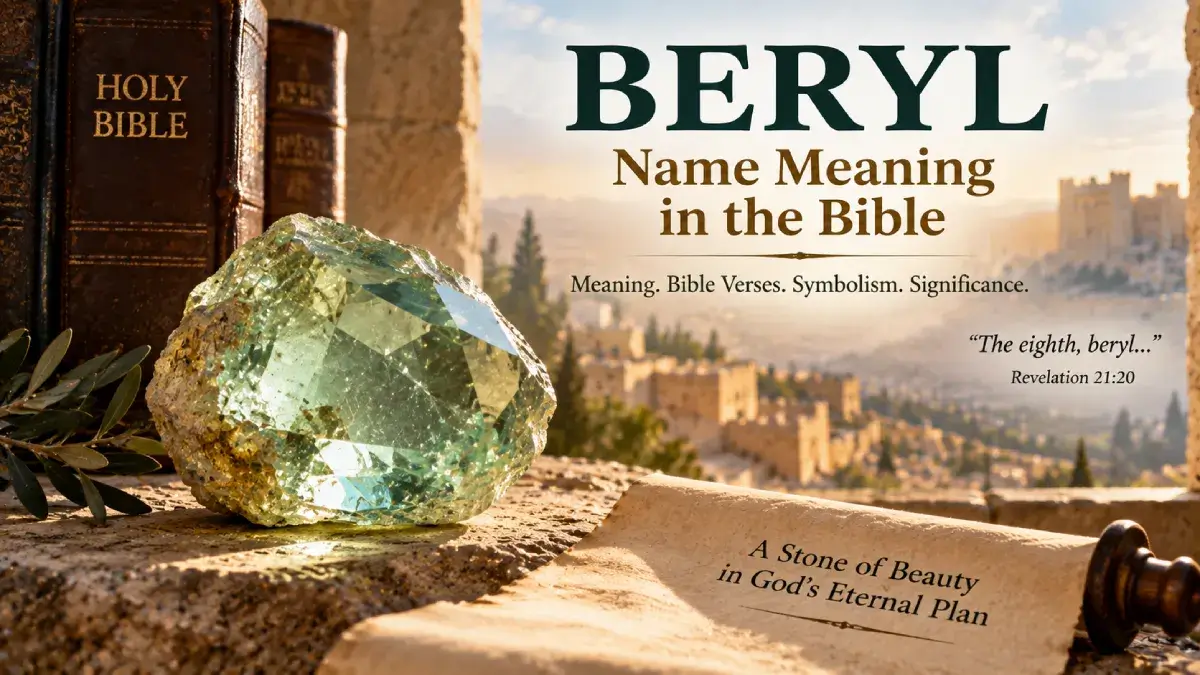
The name Beryl is connected to the precious gemstone called beryl in the Bible. However, there is an important distinction: Beryl is not the name of a person recorded in the Bible. Rather, the Bible mentions beryl as a precious stone in several passages.
As a given name, Beryl comes from the English word for the gemstone and ultimately traces back to the ancient Greek bēryllos, meaning “beryl,” a precious stone. The personal name came into English use much later, in the 19th century. (Behind the Name)
In Scripture, beryl is associated with:
- beauty and preciousness
- the priestly breastplate
- heavenly visions
- splendor and glory
- the foundation of the New Jerusalem
The exact identity and color of the biblical stone are uncertain. The Hebrew word tarshish is translated “beryl” in many English Bibles, but other translations render it as topaz, chrysolite, or related gemstones. (NET Bible)
So if you’re looking for the Beryl name meaning in the Bible, the safest explanation is:
Beryl means “beryl,” referring to a precious gemstone. Its biblical associations are with beauty, value, splendor, and sacred imagery, but the Bible does not give a specific personal-name meaning for Beryl.
Is Beryl a Name in the Bible?
No, Beryl is not recorded as the personal name of a biblical character.
This is an important point because many websites provide “Bible name meanings” for names that do not actually appear as personal names in Scripture.
The Bible does mention beryl as a gemstone, however.
The word occurs in passages involving:
- the high priest’s breastplate,
- Ezekiel’s visions,
- the Song of Solomon,
- Daniel’s vision,
- and the foundation stones of the New Jerusalem. (NET Bible)
Therefore, Beryl can be described as a biblically associated gemstone name, rather than a biblical character name.
What Does the Name Beryl Mean?
The name Beryl comes from the name of the gemstone.
The English word ultimately comes through Latin and Greek, with the ancient Greek bēryllos referring to the gemstone. The exact deeper origin is uncertain, although some etymological sources connect it with an Indic or South Asian gemstone term.
The modern given name Beryl developed from the gemstone name and came into use in English in the 19th century. (Behind the Name)
So the straightforward meaning is:
Beryl = a precious gemstone
It is sometimes given symbolic meanings such as:
- precious
- beautiful
- valuable
- pure
- radiant
But these are symbolic associations, not definitions explicitly assigned to the personal name by the Bible.
What Is Beryl in the Bible?
In the Bible, beryl refers to a precious stone.
The identification of the biblical gemstone is not completely certain because ancient gemstone names do not always correspond precisely to modern mineral classifications.
For example, the Hebrew word tarshish is translated “beryl” in the KJV and several other translations, while some modern translations use topaz. (BibleGateway)
The ancient gemstone may therefore have looked different from what modern readers automatically picture when they hear the word “beryl.”
This uncertainty is important when discussing the biblical symbolism of the stone.
Beryl in the High Priest’s Breastplate
One of the earliest biblical references to beryl appears in the description of the high priest’s breastplate.
Exodus 28:20 says:
“And the fourth row shall be a beryl, and an onyx, and a jasper…”
The stone was included among the twelve precious stones associated with the breastplate of the high priest.
Exodus 39:13 repeats the description when the priestly garments were constructed.
The beryl therefore appears within an important setting of worship, priesthood, and sacred service.
Easton’s Bible Dictionary identifies the Hebrew term translated “beryl” here as tarshish, while noting that other translations and traditions identify the stone differently. (Forebears)
Beryl in Exodus 28:20
Exodus 28:20 is especially significant for understanding the biblical connection of the stone.
The passage describes the fourth row of gemstones on the priestly breastplate:
“a beryl, and an onyx, and a jasper.”
Each stone formed part of the elaborate priestly garment.
The Bible does not explicitly say that each individual gemstone represents a particular personality trait or spiritual quality.
Therefore, it is better not to assign a detailed symbolic meaning to the beryl beyond what the text supports.
What we can say is that beryl belonged among the precious stones used in the sacred priestly garments.
Beryl in Ezekiel’s Vision
Beryl also appears in Ezekiel’s extraordinary vision.
Ezekiel 1:16 says:
“And the appearance of the wheels and their work was like unto the colour of a beryl…”
The same imagery appears again in Ezekiel 10:9.
The vision describes mysterious wheels associated with the living creatures and God’s heavenly throne imagery.
Here, beryl contributes to a description of something brilliant, extraordinary, and visually striking.
The exact color of the stone remains uncertain because the Hebrew gemstone terminology does not map perfectly onto modern mineral names. (BibleGateway)
What Does Beryl Symbolize in Ezekiel?
It is important to distinguish biblical imagery from later symbolic interpretation.
Ezekiel does not say:
“Beryl represents this specific spiritual quality.”
Instead, the stone is used to describe the appearance of the wheels in the prophet’s vision.
The gemstone contributes to the overall picture of splendor and otherworldly brilliance.
So, if Beryl is being used as a personal name, a reasonable devotional association could be radiance or preciousness, but that should be presented as an application rather than a direct biblical definition.
Beryl in Daniel 10:6
One of the most striking references to beryl appears in Daniel 10:6.
Daniel describes the heavenly figure he sees:
“His body also was like the beryl, and his face as the appearance of lightning…”
The description continues with:
- a face like lightning,
- eyes like flaming torches,
- arms and feet like polished bronze,
- and a voice like the sound of a multitude.
The beryl description is therefore part of an intensely radiant vision.
Different translations render the stone differently. Some use beryl, while others use topaz or yellow jasper. This reflects uncertainty about precisely which ancient gemstone Daniel had in mind. (Bible Hub)
What Does Beryl Mean in Daniel 10?
Daniel does not provide a dictionary-style definition of the gemstone.
Instead, it contributes to the visual description of the heavenly figure.
The surrounding imagery is full of:
- brightness,
- fire,
- lightning,
- polished metal,
- and overwhelming sound.
Consequently, beryl in Daniel 10 contributes to the impression of brilliance and extraordinary splendor.
If someone named Beryl wants a devotional association from this passage, radiance and preciousness are reasonable themes—but they should not be presented as the literal meaning of the name.
Beryl in Song of Solomon
Beryl also appears in the Song of Solomon.
Song of Solomon 5:14 says:
“His hands are as gold rings set with the beryl…”
The verse is part of a poetic description of the beloved.
The imagery uses precious materials to communicate beauty and attractiveness.
Beryl therefore appears here in the context of poetic beauty and preciousness.
Easton’s Bible Dictionary lists Song of Solomon 5:14 among the biblical references to the stone. (BibleGateway)
Beryl in Revelation 21:20
Perhaps the most significant New Testament reference to beryl occurs in Revelation 21.
John describes the foundation stones of the New Jerusalem.
Revelation 21:20 says:
“The eighth, beryl; the ninth, a topaz; the tenth, a chrysoprasus…”
Beryl is listed as the eighth foundation stone of the city.
The passage presents a city characterized by extraordinary beauty and precious materials.
The Greek word translated “beryl” here is bēryllos (βήρυλλος). Strong’s lexicon identifies it as a precious stone, commonly understood as beryl.
What Does Beryl Symbolize in Revelation?
Revelation 21 does not explicitly assign an individual symbolic meaning to each foundation stone.
Instead, the collection of precious stones contributes to the overall description of the glory, beauty, and magnificence of the New Jerusalem.
The beryl is therefore part of a larger picture of:
- preciousness,
- beauty,
- permanence,
- and heavenly glory.
We should be cautious about claiming that “beryl specifically means X” in Revelation when the text itself does not make that claim.
7 Bible Verses About Beryl
The word or corresponding gemstone appears in several important biblical passages.
1. Exodus 28:20
“And the fourth row shall be a beryl, and an onyx, and a jasper…”
Context: The high priest’s breastplate.
2. Exodus 39:13
Beryl appears again in the description of the completed priestly garments.
Context: Sacred priestly clothing.
3. Song of Solomon 5:14
“His hands are as gold rings set with the beryl…”
Context: Poetic description of beauty.
4. Ezekiel 1:16
“The appearance of the wheels and their work was like unto the colour of a beryl…”
Context: Ezekiel’s vision.
5. Ezekiel 10:9
The wheels associated with the cherubim are again described with beryl-like appearance.
Context: Heavenly vision.
6. Daniel 10:6
“His body also was like the beryl…”
Context: Daniel’s extraordinary vision.
7. Revelation 21:20
“The eighth, beryl…”
Context: One of the foundation stones of the New Jerusalem.
These seven passages are commonly identified as the Bible’s references to beryl in English translations that use the term. (Protos)
What Color Was Biblical Beryl?
This is one of the more complicated questions.
Modern beryl can occur in several colors, including:
- green,
- blue,
- yellow,
- pink,
- and colorless varieties.
Green beryl includes emerald, while blue beryl includes aquamarine.
However, the biblical gemstone terminology cannot always be matched confidently with modern mineral classifications.
For example, the Hebrew tarshish is translated “beryl” in some Bibles but “topaz” in others. Some ancient and traditional sources have also associated the word with chrysolite. (BibleGateway)
Therefore, it is better to say:
The exact appearance of the biblical beryl is uncertain.
This is more accurate than insisting that every biblical reference describes the modern green gemstone.
Is Beryl a Good Biblical Name?
If you are considering Beryl as a baby name, the name has a genuine biblical gemstone connection, even though it is not the name of a biblical person.
Its strongest biblical associations come from the passages where beryl appears among precious stones.
The name can therefore evoke ideas such as:
- preciousness,
- beauty,
- rarity,
- brilliance,
- and value.
However, these are devotional associations rather than a specific biblical name meaning.
There is no verse saying:
“Beryl means…”
in the way that some biblical names are explicitly explained.
Is Beryl a Christian Name?
Beryl can be used as a Christian or faith-inspired name because the gemstone is mentioned in Scripture.
Its biblical connections include:
- the priestly breastplate,
- Ezekiel’s heavenly vision,
- Daniel’s vision,
- and the foundation of the New Jerusalem.
The name itself, however, became a personal name much later than the biblical period. Sources on name history place its English use as a given name in the 19th century. (Behind the Name)
So it is more accurate to call Beryl a Christian-associated gemstone name rather than a biblical personal name.
What Is the Spiritual Meaning of the Name Beryl?
If you’re looking for a spiritual interpretation of the name rather than a strict lexical definition, several themes can be drawn from its biblical appearances.
1. Preciousness
Beryl appears among precious stones.
This can remind us of the value God places on what is precious and beautiful.
2. Beauty
The stone appears in poetic and visionary descriptions.
This can inspire a theme of beauty and excellence.
3. Radiance
In Daniel 10, beryl forms part of an overwhelmingly bright description involving lightning and fire.
4. Sacred Service
Beryl was part of the high priest’s breastplate in Exodus.
This connects the stone with the setting of worship and priestly ministry.
5. Heavenly Glory
Beryl appears among the foundation stones of the New Jerusalem in Revelation 21.
This places the gemstone within one of Scripture’s great visions of God’s future dwelling with His people.
Again, these are biblical associations, not definitions that Scripture directly assigns to the personal name.
Beryl Name Meaning: Biblical vs. Modern
It helps to separate the two.
| Question | Answer |
|---|---|
| Is Beryl a person in the Bible? | No |
| Is beryl mentioned in the Bible? | Yes |
| What is beryl? | A precious gemstone |
| Hebrew term associated with beryl | tarshish |
| Greek word in Revelation 21:20 | bēryllos |
| Does the Bible give Beryl as a personal-name meaning? | No |
| Modern name meaning | The gemstone beryl |
| Main biblical associations | Preciousness, beauty, splendor, sacred imagery |
| Is the exact biblical stone certain? | No |
The distinction is important because a gemstone mentioned in Scripture is not automatically a biblical personal name.
Beryl vs. Other Gemstone Names in the Bible
Beryl is one of several gemstones mentioned in Scripture.
Others include:
- jasper,
- sapphire,
- emerald,
- onyx,
- topaz,
- amethyst,
- and others.
Many of these stones appear in descriptions of priestly garments or the New Jerusalem.
The biblical writers used precious stones in settings that communicate beauty, value, craftsmanship, and glory.
Beryl is part of this larger biblical imagery.
Does Beryl Mean “Pure” in the Bible?
You may encounter websites claiming that Beryl means “pure,” “crystal clear,” or similar qualities.
These descriptions should be treated carefully.
The straightforward historical meaning of the name is connected to the precious stone beryl, while proposed deeper etymologies vary. The ancient Greek bēryllos itself refers to the gemstone, and its ultimate origin is uncertain.
Therefore:
“Precious gemstone” is the safer meaning.
“Pure” or “clear” can be used as symbolic associations, but they should not be presented as a definite biblical definition.
What Can Christians Learn From Beryl in the Bible?
Although Scripture does not give beryl a single symbolic definition, its appearances provide several themes worth reflecting on.
God values beauty
Beryl appears among beautiful and precious materials.
Sacred things can be beautifully made
The high priest’s garments included precious stones as part of their design.
God’s glory is beyond ordinary human experience
Beryl appears in descriptions of Ezekiel’s and Daniel’s extraordinary visions.
The future hope of God’s people is described with precious imagery
Beryl is among the foundation stones of the New Jerusalem.
Biblical gemstones should be interpreted carefully
Ancient gemstone names do not always correspond exactly to modern mineral classifications.
That last point is especially important when studying the Bible.
Frequently Asked Questions
What does the name Beryl mean in the Bible?
Beryl means the name of a precious gemstone. The Bible mentions beryl in several passages, but Beryl is not the personal name of a biblical character.
Is Beryl a biblical name?
Beryl is not a biblical personal name in the sense of being the name of a person recorded in Scripture. It is a modern given name derived from the gemstone that is mentioned in the Bible.
What is the Hebrew meaning of Beryl?
The Hebrew word commonly translated “beryl” in the Old Testament is tarshish. Its exact identification is uncertain, and some translations render it as topaz or another gemstone.
What does Beryl symbolize in the Bible?
Beryl is associated with preciousness, beauty, splendor, sacred imagery, and heavenly visions. However, the Bible does not explicitly assign one symbolic meaning to the stone.
Where is Beryl mentioned in the Bible?
Beryl appears in Exodus 28:20, Exodus 39:13, Song of Solomon 5:14, Ezekiel 1:16, Ezekiel 10:9, Daniel 10:6, and Revelation 21:20.
Is Beryl a good Christian baby name?
Beryl can be considered a faith-associated name because the gemstone has several biblical references. Its strongest meaning comes from the gemstone itself rather than from a biblical character.
What does Beryl mean spiritually?
As a devotional interpretation, Beryl can suggest preciousness, beauty, radiance, and heavenly glory because of the contexts in which the gemstone appears in Scripture. These are biblical associations rather than a direct definition of the name.
What color is beryl in the Bible?
The exact color is uncertain. Biblical tarshish, translated “beryl” in many versions, is identified differently across translations and ancient sources.
Final Thoughts on the Beryl Name Meaning in the Bible
The Beryl name meaning in the Bible is best understood by starting with an important distinction.
Beryl is not a biblical person’s name.
It is the name of a precious gemstone that appears in Scripture.
The gemstone is mentioned in the priestly breastplate, poetic descriptions, Ezekiel’s visions, Daniel’s vision, and the foundation of the New Jerusalem.
As a personal name, Beryl comes from the English gemstone name and ultimately from the ancient Greek bēryllos.
Its biblical associations can therefore remind us of preciousness, beauty, radiance, sacred service, and heavenly glory.
But it is wise to distinguish between what Scripture actually says and later devotional interpretations.
The clearest answer is:
Beryl means “a precious gemstone.” In the Bible, beryl appears in contexts involving priestly garments, beauty, heavenly visions, and the New Jerusalem. The Bible does not give Beryl a specific personal-name meaning because Beryl is not the name of a biblical character.
That makes Beryl an interesting choice for anyone looking for a name with a biblical gemstone connection and a rich history of beauty and preciousness.