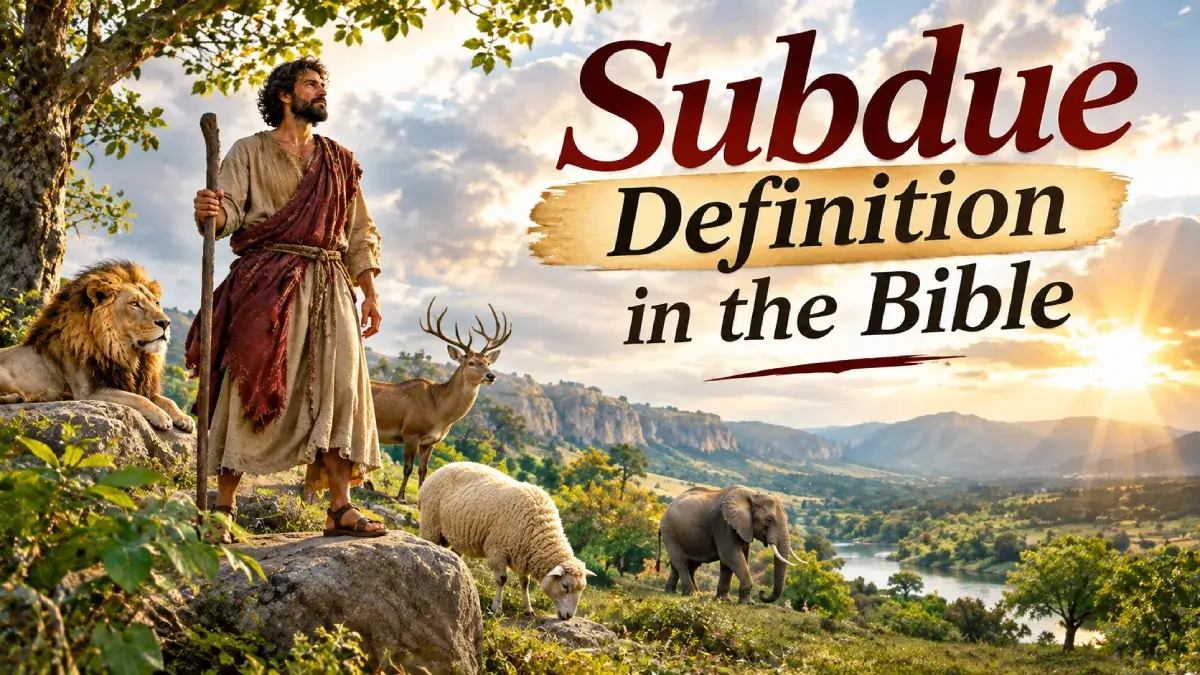
In the Bible, to subdue means to bring something under control, bring it into subjection, or exercise authority over it. In Genesis 1:28, God commands humanity to subdue the earth and have dominion over the living creatures.
The original Hebrew word translated as “subdue” is kavash (כָּבַשׁ), which carries the idea of bringing under control or into subjection.
In the creation context, subduing the earth describes humanity’s responsibility to exercise authority over the created world. It should be understood alongside God’s command to fill the earth and His purpose in creating humanity in His image.
The word subdue appears in important passages of the Bible, especially in the creation account in Genesis. When God created humanity, He gave Adam and Eve a responsibility that included filling the earth, having dominion over living creatures, and subduing the earth. But what exactly does it mean to subdue something according to the Bible?
Does subduing the earth mean controlling nature? Does it refer to ruling over other people? And how should Christians understand this instruction in their everyday lives?
Understanding the subdue definition in the Bible helps us appreciate God’s original purpose for humanity and the responsibility that comes with the authority He gives. It also helps us distinguish biblical dominion from selfish control or exploitation.
In this article, we will explore the meaning of subdue, examine important Bible verses, look at the Hebrew word used in Genesis 1:28, and discover the spiritual lessons behind this powerful biblical concept.
What Is the Biblical Meaning of Subdue?
The word subdue generally means to bring something under control, overcome resistance, or establish authority over something.
In biblical passages, the word can describe different situations, including:
- Bringing land under cultivation or control.
- Establishing authority over a territory.
- Bringing something or someone into subjection.
- Overcoming opposition.
- Exercising responsibility over what has been entrusted to someone.
The exact meaning depends on the passage and its context.
One of the most important uses appears in Genesis 1:28, where God gives humanity responsibility over the earth and its living creatures.
Genesis 1:28 (KJV):
And God blessed them, and God said unto them, Be fruitful, and multiply, and replenish the earth, and subdue it: and have dominion over the fish of the sea, and over the fowl of the air, and over every living thing that moveth upon the earth.
This verse connects subduing the earth with having dominion over living creatures. It establishes humanity’s responsibility within God’s creation.
The instruction is not simply about power. It is about exercising the authority God entrusted to humanity.
The Hebrew Meaning of Subdue in the Bible
The Hebrew word translated as “subdue” in Genesis 1:28 is kavash (כָּבַשׁ).
It carries the meaning of bringing under control, subjugating, or bringing into subjection.
The word is used in different Old Testament contexts. Depending on the passage, it can describe bringing land under control, establishing authority, or subjecting something to a ruler.
In Genesis 1:28, it appears in the context of God’s instruction to humanity concerning the earth.
Why Is This Hebrew Word Important?
Understanding kavash helps explain that the command to subdue the earth involves more than simply living in it.
Humanity was given responsibility to exercise authority over the created world.
However, the word should not be interpreted in isolation. Genesis 1:26–28 describes humanity as created in God’s image and entrusted with dominion over other living creatures.
This means the instruction belongs to a larger biblical picture of God’s authority and humanity’s responsibility under Him.
What Does “Subdue the Earth” Mean in Genesis 1:28?
Genesis 1:28 is the most well-known passage containing the word “subdue.” To understand its meaning, we need to examine the command in its creation context.
God gives Adam and Eve several instructions:
- Be fruitful.
- Multiply.
- Fill the earth.
- Subdue the earth.
- Have dominion over the living creatures.
These instructions describe humanity’s place and responsibility in God’s creation.
1. Humanity Was Given Responsibility Over the Earth
God did not create humanity without purpose. He gave people a role within the world He had made.
The command to subdue the earth indicates that human beings were entrusted with authority to bring the created world under their responsible care and use.
2. Humanity Was Given Dominion Over Living Creatures
Genesis 1:28 also mentions fish, birds, and every living creature that moves upon the earth.
This shows that human authority includes responsibility toward the animal world.
The verse does not give people permission to act with cruelty or selfishness. God’s authority is the foundation of human dominion, and humanity remains accountable to Him.
3. Subduing the Earth Is Connected With Human Responsibility
The instruction to subdue the earth is part of God’s blessing and commission to humanity.
It can be understood as a responsibility to cultivate, develop, and manage the world God created.
This includes recognizing that the earth is not an independent possession that humanity can use without limits. It belongs to God.
Psalm 24:1 (KJV):
The earth is the LORD’S, and the fulness thereof; the world, and they that dwell therein.
This verse reminds us that God remains the ultimate owner of creation.
What Is the Difference Between Subdue and Dominion in the Bible?
In Genesis 1:28, the words subdue and dominion appear together, but they emphasize related aspects of humanity’s responsibility.
| Word | General meaning | Emphasis in Genesis 1:28 |
|---|---|---|
| Subdue | Bring under control or into subjection | Bringing the earth under responsible human control |
| Dominion | Exercise rule or authority | Exercising authority over living creatures |
Both words communicate that God entrusted humanity with authority over the created world.
However, they should not be treated as exactly identical. Subduing emphasizes bringing something under control, while dominion emphasizes exercising rule or authority.
Together, they describe humanity’s responsibility under God’s authority.
Important Bible Verses About Subduing
Genesis 1:28 is not the only passage where the idea of subduing appears. Other Scriptures use the word in connection with land, nations, authority, and overcoming opposition.
Here are some important Bible verses to study.
1. Genesis 1:28 – Subdue the Earth
And God blessed them, and God said unto them, Be fruitful, and multiply, and replenish the earth, and subdue it: and have dominion over the fish of the sea, and over the fowl of the air, and over every living thing that moveth upon the earth.
This is the foundational passage for understanding the biblical meaning of subdue.
God gives humanity authority and responsibility over the earth and its living creatures.
Key lesson: Authority comes with responsibility. We should recognize God’s ownership of creation and exercise our responsibilities faithfully.
2. Numbers 32:22 – The Land Is Subdued Before the Lord
And the land be subdued before the LORD: then afterward ye shall return, and be guiltless before the LORD, and before Israel; and this land shall be your possession before the LORD.
This verse appears during the Israelites’ journey toward the Promised Land.
The tribes of Reuben and Gad had requested land on the eastern side of the Jordan. Moses instructed them to help the other Israelites in the conquest before returning to their inheritance.
Here, subduing refers to bringing the land under Israelite control.
Key lesson: The verse illustrates the importance of fulfilling responsibilities and supporting others rather than seeking personal benefit alone.
3. Joshua 18:1 – The Land Was Subdued Before Israel
And the whole congregation of the children of Israel assembled together at Shiloh, and set up the tabernacle of the congregation there. And the land was subdued before them.
This passage describes a significant stage in Israel’s settlement in the Promised Land.
The land had been brought under Israel’s control, and the people gathered at Shiloh to establish the tabernacle.
Key lesson: God’s people were called to follow His instructions and remain committed to the responsibilities He had given them.
4. 2 Samuel 8:11 – David Dedicated Conquered Treasures to God
Which also king David did dedicate unto the LORD, with the silver and gold that he had dedicated of all nations which he subdued;
This verse describes King David dedicating silver and gold obtained from the nations he had subdued.
The passage reflects David’s military victories and his decision to dedicate the spoils to the Lord.
Key lesson: Achievements and resources should not become reasons for pride. We should acknowledge God and use what we have responsibly.
5. 1 Chronicles 22:18 – God Gave Israel Rest
Is not the LORD your God with you? and hath he not given you rest on every side? for he hath given the inhabitants of the land into mine hand; and the land is subdued before the LORD, and before his people.
David speaks about the peace and security God had given Israel.
The verse connects the subduing of the land with God’s help and the establishment of peace for His people.
Key lesson: Human achievements should be understood in light of God’s provision and help.
6. Nehemiah 5:5 – A Description of Oppression
Yet now our flesh is as the flesh of our brethren, our children as their children: and, lo, we bring into bondage our sons and our daughters to be servants, and some of our daughters are brought unto bondage already: neither is it in our power to redeem them; for other men have our lands and vineyards.
Although this verse does not use the English word “subdue,” it describes people being placed under oppressive control.
The passage shows the harmful consequences of injustice and exploitation among the Israelites.
Key lesson: Authority should never become an excuse for oppression. God’s people are called to treat others with justice and compassion.
7. Psalm 47:3 – God Subdues Nations
He shall subdue the people under us, and the nations under our feet.
This psalm celebrates God’s power and sovereignty over the nations.
The verse describes God bringing peoples and nations under the authority of His people.
It should be understood within the psalm’s celebration of God’s kingship, rather than as permission for personal domination.
Key lesson: God is sovereign over every nation and human authority.
8. Psalm 18:39 – Strength for Battle
For thou hast girded me with strength unto the battle: thou hast subdued under me those that rose up against me.
David praises God for giving him strength and victory over his enemies.
The verse emphasizes that David’s success was not simply the result of his own ability. He recognizes God as the source of his strength.
Key lesson: We should acknowledge God when we experience success and remember that strength and ability are gifts to be used responsibly.
Does Subdue Mean to Dominate or Exploit Others?
One important question about Genesis 1:28 is whether the command to subdue gives humanity permission to dominate or exploit the earth and its creatures.
The Bible’s wider teaching helps us understand why that would be an incomplete interpretation.
Genesis 1:28 gives humanity authority over the created world, but Genesis also describes humanity’s relationship with the earth in terms of work and care.
Genesis 2:15 (KJV):
And the LORD God took the man, and put him into the garden of Eden to dress it and to keep it.
This verse describes Adam’s responsibility in the Garden of Eden.
The words “dress it” and “keep it” communicate the responsibility to work in and care for the garden.
When Genesis 1:28 and Genesis 2:15 are considered together, humanity’s authority over creation should be understood alongside its responsibility to care for what God made.
Therefore, subduing the earth should not be used as an excuse for careless destruction, cruelty, or selfish exploitation.
What Does Subdue Mean Spiritually?
The primary meaning of subdue in Genesis 1:28 concerns humanity’s responsibility over the earth. However, the broader biblical theme of bringing things under control can also help us reflect on spiritual growth.
These applications should be distinguished from the direct meaning of Genesis 1:28.
1. Learning Self-Control
The Bible teaches believers to exercise self-control rather than allow sinful desires to govern their lives.
Galatians 5:22–23 (KJV):
But the fruit of the Spirit is love, joy, peace, longsuffering, gentleness, goodness, faith,
Meekness, temperance: against such there is no law.
The word “temperance” in the KJV refers to self-control.
Although this passage does not use the word “subdue,” it teaches the importance of allowing the Holy Spirit to shape our attitudes and actions.
2. Resisting Sin
Believers are called to turn away from sin and pursue righteousness.
Romans 6:12 (KJV):
Let not sin therefore reign in your mortal body, that ye should obey it in the lusts thereof.
Paul teaches Christians not to allow sin to rule their lives.
This is a useful spiritual application of the broader idea of overcoming something that seeks to control us.
3. Bringing Thoughts Under Christ’s Authority
2 Corinthians 10:5 (KJV):
Casting down imaginations, and every high thing that exalteth itself against the knowledge of God, and bringing into captivity every thought to the obedience of Christ;
Paul describes bringing thoughts into obedience to Christ.
This verse teaches believers to examine their thinking and reject ideas that oppose the knowledge of God.
It does not directly define the word “subdue,” but it offers a related lesson about living under Christ’s authority.
4. Overcoming Temptation
The Bible encourages believers to resist temptation and remain faithful to God.
James 4:7 (KJV):
Submit yourselves therefore to God. Resist the devil, and he will flee from you.
The order is important: believers are first instructed to submit to God and then resist the devil.
Spiritual strength begins with dependence on God rather than confidence in personal power.
What Does It Mean to Subdue the Earth Today?
Genesis 1:28 describes humanity’s responsibility over creation. Although the world today is very different from the world of Adam and Eve, the principle of responsibility remains relevant.
Here are some practical ways to reflect on this instruction.
1. Care for the Environment
God created the earth, and people should treat it with responsibility.
Caring for natural resources, avoiding unnecessary waste, and respecting the created world are practical ways to recognize that creation belongs to God.
2. Use Natural Resources Responsibly
Humanity benefits from the earth’s resources, but using them should involve wisdom and responsibility.
The biblical idea of dominion should not be confused with unlimited permission to destroy what God created.
3. Develop Your Abilities
Human beings have been given the ability to work, create, cultivate, and develop.
Using our talents responsibly can be understood as part of fulfilling our responsibilities in the world.
4. Exercise Authority With Integrity
Whether someone leads a family, manages a workplace, or holds a position of public responsibility, authority should be exercised with fairness and care.
Biblical authority should reflect accountability to God rather than selfish ambition.
Frequently Asked Questions About the Subdue Definition in the Bible
What is the simple definition of subdue in the Bible?
To subdue means to bring something under control, bring it into subjection, or exercise authority over it. In Genesis 1:28, God gives humanity the responsibility to subdue the earth.
What does subdue mean in Genesis 1:28?
In Genesis 1:28, subdue refers to bringing the earth under human control and exercising authority over the created world. It appears alongside the instruction to have dominion over living creatures.
What is the Hebrew word for subdue?
The Hebrew word translated as “subdue” in Genesis 1:28 is kavash (כָּבַשׁ). It carries the idea of bringing under control, subjugating, or bringing into subjection.
What is the difference between subdue and dominion?
Subdue generally means to bring something under control or into subjection. Dominion refers to exercising authority or rule. In Genesis 1:28, both words describe related aspects of humanity’s responsibility over creation.
Does subdue mean to destroy the earth?
No. Genesis 1:28 gives humanity authority over the earth, but Genesis 2:15 also describes humanity’s responsibility to work in and keep the garden. The wider creation account supports an understanding of authority accompanied by responsibility.
What does subdue mean spiritually?
The word’s direct meaning depends on its biblical context. As a spiritual application, the broader idea of bringing something under control can help explain self-control, resisting sin, and bringing thoughts into obedience to Christ. These ideas are taught in passages such as Romans 6:12 and 2 Corinthians 10:5.
Does the Bible say we should subdue our flesh?
The Bible teaches believers not to let sinful desires control their lives. Romans 6:12 encourages Christians not to allow sin to reign in their mortal bodies, while Galatians 5:22–23 identifies self-control as part of the fruit of the Spirit.
Is subduing the earth still relevant today?
Genesis 1:28 establishes humanity’s responsibility over the earth. Its principles remain relevant when considering how people use natural resources, care for creation, develop their abilities, and exercise authority responsibly.
Final Thoughts
The subdue definition in the Bible is closely connected with authority, responsibility, and God’s original purpose for humanity.
In Genesis 1:28, God commands Adam and Eve to fill the earth, subdue it, and exercise dominion over living creatures. The Hebrew word kavash communicates the idea of bringing something under control or into subjection.
Other passages use the idea of subduing in connection with land, nations, and victory over opposition. Together, these Scriptures show that the word must be understood according to its context.
For Christians today, the creation account is also a reminder that authority comes with responsibility. The earth belongs to God, and humanity is accountable for how it uses and cares for what He has made.
To subdue, in the biblical sense, is to exercise the authority God has entrusted to humanity while remembering that all authority ultimately belongs to Him.