Trees play an important role throughout the Bible.
From the Tree of Life in Genesis to the olive tree, cedar of Lebanon, fig tree, and mustard tree, God often used trees to teach spiritual truths. One lesser-known but significant tree mentioned in Scripture is the tamarisk tree.
Although it appears only a few times in the Bible, the tamarisk tree is connected with worship, covenant, leadership, and remembrance. It is associated with key biblical figures such as Abraham, Saul, and David.
What is the tamarisk tree?
Why is it mentioned in Scripture?
What spiritual lessons can Christians learn from it today?
Let’s explore the biblical meaning and significance of the tamarisk tree.
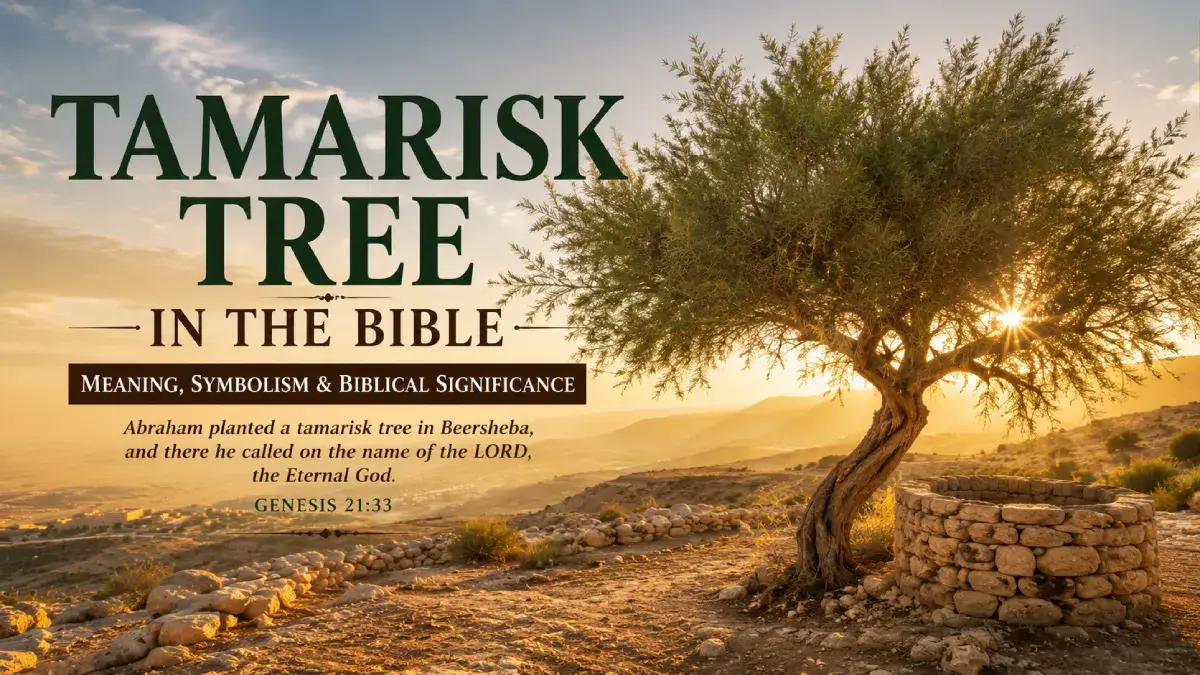
“Abraham planted a tamarisk tree in Beersheba, and there he called on the name of the LORD, the Eternal God.” — Genesis 21:33
What Is a Tamarisk Tree?
The tamarisk is a hardy evergreen tree or shrub that grows in dry and desert regions of the Middle East.
It is well suited to harsh environments because it can:
🌳 Survive long periods of drought
🌞 Thrive in hot climates
🌿 Grow in sandy or salty soil
💧 Reach underground water through deep roots
Because of these qualities, the tamarisk became a symbol of endurance and stability.
Where Is the Tamarisk Tree Mentioned in the Bible?
The tamarisk tree appears several times in the Old Testament.
The most significant passages include:
- Genesis 21:33
- 1 Samuel 22:6
- 1 Samuel 31:13
Each reference provides insight into its historical and spiritual significance.
Abraham Plants a Tamarisk Tree
Genesis 21:33
“Abraham planted a tamarisk tree in Beersheba, and there he called on the name of the LORD, the Eternal God.”
This is the Bible’s first mention of the tamarisk tree.
After making a covenant with Abimelek, Abraham planted the tree at Beersheba.
He then worshiped God and called on His name.
Why Did Abraham Plant It?
Many Bible scholars believe the tree served as:
- A memorial of God’s faithfulness
- A symbol of peace after the covenant
- A reminder of God’s everlasting promises
- A place associated with worship
Unlike fast-growing plants, tamarisk trees live for many years.
Planting one reflected Abraham’s confidence in God’s future promises.
King Saul Under the Tamarisk Tree
1 Samuel 22:6
“Saul was seated, spear in hand, under the tamarisk tree on the hill at Gibeah.”
Later in Israel’s history, King Saul is described sitting beneath a tamarisk tree while addressing his officials.
Unlike Abraham’s joyful worship, this passage occurs during a time of fear, jealousy, and distrust.
Saul’s actions remind readers that simply being near symbols of faith does not guarantee obedience to God.
The Tamarisk Tree After Saul’s Death
1 Samuel 31:13
“They took their bones and buried them under the tamarisk tree at Jabesh.”
After Saul and his sons died in battle, the people of Jabesh-gilead recovered their bodies and buried their bones beneath a tamarisk tree.
This act showed:
- Honor
- Gratitude
- Respect
- Remembrance
The tree became a place connected with dignity and memory.
What Does the Tamarisk Tree Symbolize?
Although Scripture does not directly explain its symbolism, the context of each passage reveals several meaningful themes.
1. Endurance
The tamarisk survives in harsh environments.
Spiritually, it reminds believers to remain faithful even during difficult seasons.
“Blessed is the one who perseveres under trial.” — James 1:12
2. Deep Roots of Faith
Its deep roots allow it to find water beneath dry ground.
Likewise, Christians are called to remain deeply rooted in God.
“Rooted and built up in him.” — Colossians 2:7
3. Worship
Abraham planted the tree while worshiping the Lord.
True worship establishes lasting spiritual foundations.
4. God’s Faithfulness
The long life of the tamarisk reflects God’s enduring promises.
Just as the tree stood for generations, God’s covenant remains forever.
5. Remembrance
The burial of Saul beneath the tamarisk reminds believers to remember God’s work throughout history.
Spiritual Lessons from the Tamarisk Tree
🌳 Stay Rooted in God
Strong roots enable trees to survive storms. Strong faith helps believers endure life’s challenges.
🙏 Worship in Every Season
Abraham worshiped during a peaceful season. Believers should praise God in both joyful and difficult times.
❤️ Trust God’s Long-Term Plan
Trees grow slowly. Likewise, God’s purposes often unfold over time. Patience is part of faith.
✨ Leave a Godly Legacy
Abraham’s act pointed future generations toward God. Our lives should also leave a lasting testimony of faith.
Other Trees Mentioned in the Bible
The Bible frequently uses trees to communicate spiritual truths.
Olive Tree
Represents peace, blessing, and the Holy Spirit.
Cedar of Lebanon
Represents strength, majesty, and stability.
Fig Tree
Often symbolizes fruitfulness and spiritual condition.
Palm Tree
Represents righteousness and flourishing.
Tree of Life
Represents eternal life and God’s perfect provision.
Like these trees, the tamarisk points believers toward God’s enduring faithfulness.
A Devotional Reflection
The tamarisk tree teaches an important lesson.
It flourishes where many other trees cannot.
Its roots reach deep beneath the surface.
Its growth is steady rather than hurried.
Faith often develops the same way.
God uses difficult seasons to deepen our dependence on Him.
Like Abraham, we are called to plant our lives firmly in God’s promises and worship Him faithfully.
When our roots are grounded in Christ, we can remain steadfast regardless of life’s circumstances.
“Abraham planted a tamarisk tree… and there he called on the name of the LORD.” — Genesis 21:33
A Prayer Inspired by the Tamarisk Tree
🙏 “Heavenly Father, help me remain deeply rooted in You. Strengthen my faith during difficult seasons and teach me to trust Your promises even when I cannot see the outcome. May my life reflect steadfast faith, joyful worship, and a lasting testimony that points others to You. In Jesus’ name, Amen.”
Frequently Asked Questions
What is a tamarisk tree in the Bible?
A tamarisk is a hardy desert tree known for its deep roots and ability to thrive in difficult environments.
Who planted the tamarisk tree?
Abraham planted a tamarisk tree in Beersheba after making a covenant with Abimelek (Genesis 21:33).
How many times is the tamarisk tree mentioned in the Bible?
It is specifically mentioned in Genesis 21:33, 1 Samuel 22:6, and 1 Samuel 31:13.
What does the tamarisk tree symbolize?
It symbolizes endurance, faithfulness, worship, remembrance, and deep spiritual roots.
Why is the tamarisk tree important?
It reminds believers of God’s everlasting promises and encourages steadfast faith through every season of life.
Final Reflection
The tamarisk tree may appear only a few times in Scripture, but its message is timeless.
🌳 Stay deeply rooted in God.
🙏 Worship faithfully.
❤️ Trust God’s promises.
✨ Endure through every season.
Like Abraham’s tamarisk tree in Beersheba, may your life become a lasting testimony of faith that points others to the everlasting God.
“The Eternal God is your refuge, and underneath are the everlasting arms.” — Deuteronomy 33:27
May the example of the tamarisk tree inspire you to stand firm, grow steadily, and trust the Lord through every season of life.