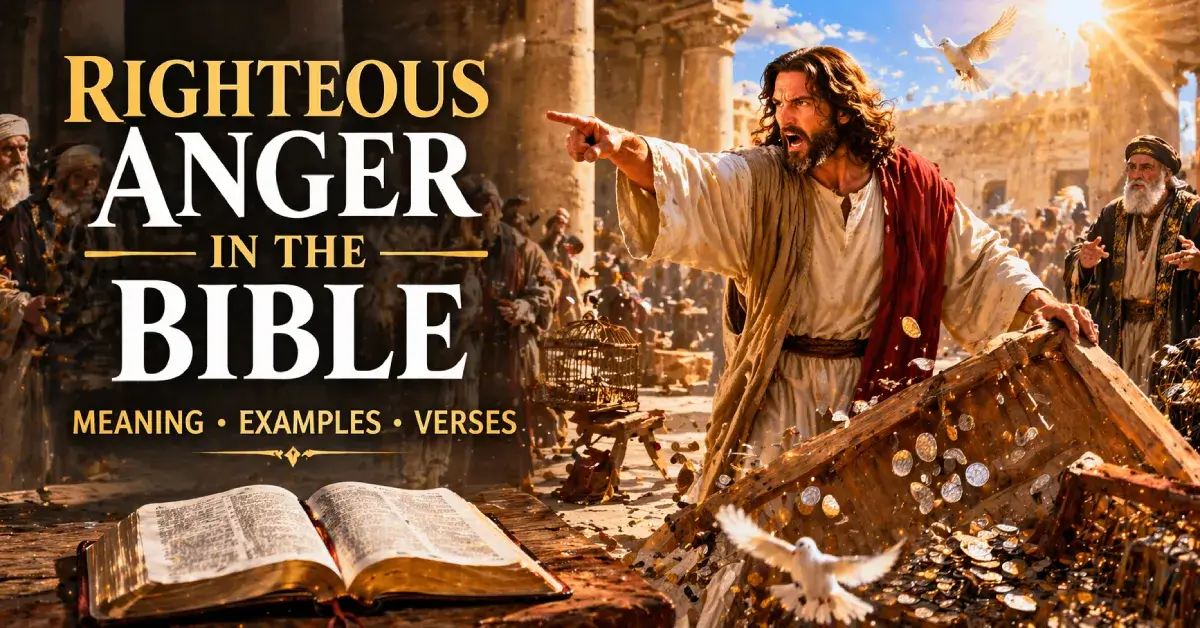
Anger is a natural human emotion – one we all experience at times. But for Christians, it raises an important question: is anger always sinful, or can it be righteous?
The Bible doesn’t ignore anger – it addresses it honestly and repeatedly. From Moses to Jesus to Jonah, Scripture shows both holy anger and destructive rage, often within the same story.
“In your anger do not sin… do not let the sun go down while you are still angry.” – Ephesians 4:26
Anger itself isn’t always wrong – what matters is why you’re angry, and what you do with it.
What Is Righteous Anger?
Righteous anger is:
- Anger against sin and injustice
- A desire to defend what is right
- Anger motivated by love and truth, not wounded pride
- Controlled, not destructive
“Human anger does not produce the righteousness that God desires.” – James 1:20
Righteous anger is different from human anger rooted in pride, selfishness, or revenge – even when both feel identical in the moment.
Righteous Anger vs. Sinful Anger
| Righteous Anger | Sinful Anger |
|---|---|
| Motivated by truth and justice | Motivated by pride or wounded ego |
| Seeks justice | Seeks revenge |
| Controlled | Explosive |
| Protects others | Hurts others |
| Honors God | Dishonors God |
Righteous anger leads to action that helps. Sinful anger leads to destruction – and the two can start out feeling exactly the same.
Biblical Examples of Anger
Jesus Cleansing the Temple
The clearest example of righteous anger in Scripture is Jesus driving the money changers out of the temple.
“He overturned the tables…” – Matthew 21:12 (see also John 2:13–17)
Jesus was angry because God’s house was being misused for profit. His anger was focused on wrongdoing, motivated by holiness – not by personal insult or pride. The same pattern shows up again in Mark 3:1–5, where Jesus is angered by religious leaders more concerned with rule-keeping than a suffering man’s healing.
Moses: Righteous Anger That Later Turned Destructive
When Moses came down from Mount Sinai and saw Israel worshiping the golden calf, his anger burned hot enough to break the stone tablets.
“Moses’ anger burned hot.” – Exodus 32:19
That anger was directed at genuine rebellion against God – righteous by any measure. But years later, worn down by the people’s constant complaining, Moses struck a rock in frustration instead of simply speaking to it as God had commanded (Numbers 20:10–12) – and it cost him entry into the Promised Land. The same man, the same general emotion, but this time anger had curdled into disobedience. Even righteous anger can turn destructive if it isn’t kept in check over time.
Nehemiah and Injustice
Nehemiah became angry when he discovered wealthy Israelites exploiting the poor.
“I was very angry.” – Nehemiah 5:6
Rather than staying angry, he acted – confronting the injustice directly and helping those who were suffering. Righteous anger, followed through.
Jonah’s Anger
Jonah became furious when God chose to spare Nineveh instead of destroying it (Jonah 4). His anger wasn’t about injustice – it was about God being more merciful than Jonah wanted Him to be.
Jonah’s story is a warning: anger that feels justified can still be rooted in self-righteousness, and self-righteous anger blinds people to God’s mercy rather than reflecting His justice.
Key Bible Verses About Anger
Anger Without Sin
- Ephesians 4:26 – “In your anger do not sin… do not let the sun go down while you are still angry.”
- Psalm 4:4 – “Be angry, and do not sin.”
- James 1:19–20 – “Everyone should be quick to listen, slow to speak and slow to become angry.”
- Proverbs 15:18 – “A hot-tempered person stirs up conflict.”
- Ecclesiastes 7:9 – “Do not be quickly provoked in your spirit, for anger resides in the lap of fools.”
God’s Anger Against Sin
- Psalm 7:11 – “God is a righteous judge, a God who displays His wrath every day.”
- Nahum 1:3 – “The LORD is slow to anger.”
- Psalm 103:8 – “The LORD is compassionate and gracious, slow to anger.”
- Romans 1:18 – “The wrath of God is revealed against all ungodliness.”
- Proverbs 8:13 – “The LORD hates evil.”
Responding to Anger the Right Way
- Proverbs 15:1 – “A gentle answer turns away wrath, but a harsh word stirs up anger.”
- Ephesians 4:31 – “Get rid of all bitterness, rage and anger.”
- Romans 12:17 – “Do not repay evil for evil.”
- Romans 12:21 – “Overcome evil with good.”
- Colossians 3:8 – “Rid yourselves of all such things as these: anger, rage, malice, slander.”
Controlling Sinful Anger
- Proverbs 14:29 – “Whoever is slow to anger has great understanding, but he who has a hasty temper exalts folly.”
- Proverbs 29:11 – “Fools give full vent to their rage.”
- Proverbs 22:24 – “Do not make friends with a hot-tempered person.”
- 1 Corinthians 13:5 – “Love is not easily angered.”
- Colossians 3:13 – “Forgive as the Lord forgave you.”
- Psalm 37:8 – “Refrain from anger and turn from wrath; do not fret – it leads only to evil.”
Living with Peace and Wisdom
- Matthew 5:9 – “Blessed are the peacemakers.”
- Romans 12:18 – “Live at peace with everyone.”
- James 3:17 – “The wisdom from above is peace-loving.”
- Colossians 3:15 – “Let the peace of Christ rule in your hearts.”
- Ephesians 4:32 – “Be kind and compassionate.”
How to Know If Your Anger Is Righteous
Ask yourself:
- Am I angry because God’s truth is being ignored – or because my pride is hurt? Those two can feel identical.
- Am I seeking justice, or am I seeking revenge? Righteous anger wants what’s right, not what feels satisfying.
- Am I responding with self-control? Righteous anger is never out of control, however intense it feels.
- Will my response actually honor God? If the honest answer is no, the anger has already tipped over.
How to Handle Anger Biblically
- Pause and pray before reacting. “The Lord is gracious and compassionate, slow to anger and rich in love.” – Psalm 145:8
- Reflect before you respond. Ask: is this about justice, or is this about pride?
- Speak the truth in love – honest, but not harsh. Proverbs 15:1’s gentle answer applies here directly.
- Let go of bitterness. Anger that isn’t released calcifies into something worse than the original offense.
- Trust God’s justice rather than trying to personally settle every score yourself.
FAQ: Righteous Anger in the Bible
Is anger a sin?
No. Anger itself isn’t sinful – but it can easily become sinful depending on its source and what you do with it.
What is righteous anger?
Anger directed at genuine sin or injustice, motivated by love for truth rather than wounded pride, and kept under control.
Did Jesus ever get angry?
Yes – most visibly when the temple was misused for profit (John 2:13–17, Matthew 21:12), and again at religious hypocrisy that prioritized rules over people (Mark 3:1–5).
How do I know if my anger is righteous?
If it’s motivated by truth, love, and justice rather than pride or revenge – and if you’re still in control of it, not controlled by it.
What does the Bible say about controlling anger?
It consistently teaches patience, self-control, and forgiveness – not suppression of the emotion itself, but mastery over what you do with it.
Final Reflection
The Bible teaches that there is a real place for righteous anger – God cares deeply about justice and truth. But He also calls believers to respond with wisdom, self-control, and grace, the same way He does.
“The Lord is merciful and gracious, slow to anger and abounding in steadfast love.” – Psalm 103:8
When anger rises, remember: it isn’t the feeling that defines you – it’s who ends up controlling it, you or God.