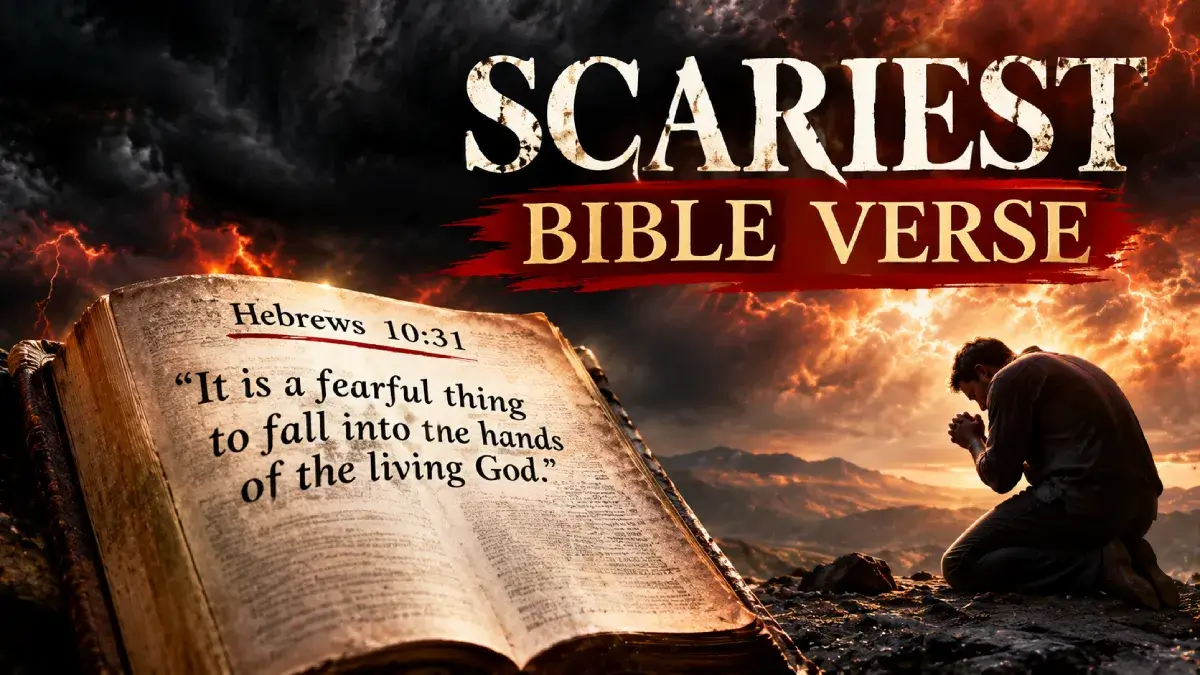
One of the scariest Bible verses is Hebrews 10:31 (KJV):
“It is a fearful thing to fall into the hands of the living God.”
This verse appears in a warning about deliberately turning away from the truth after receiving knowledge of it. It emphasizes the seriousness of rejecting God and facing His judgment.
Other frightening Bible verses include:
- Matthew 10:28 — Jesus warns about the One who can destroy both soul and body in hell.
- Revelation 6:15–17 — People attempt to hide from the wrath of the Lamb.
- Matthew 7:23 — Jesus tells some people, “I never knew you.”
- Revelation 20:15 — Those not found in the book of life are cast into the lake of fire.
- Mark 9:48 — Jesus describes the place where the worm does not die and the fire is not quenched.
These verses are frightening, but their purpose is not simply to create fear. They call people to take God seriously, turn away from sin, and recognize the importance of salvation through Jesus Christ.
The Bible is a book of hope, love, forgiveness, and salvation. It tells us about God’s mercy, the sacrifice of Jesus Christ, and the promise of eternal life. However, Scripture also contains passages that are frightening, unsettling, and difficult to read.
Some Bible verses describe God’s judgment against wickedness. Others warn about hell, eternal separation from God, the consequences of sin, and terrifying events associated with the end times. These passages remind readers that the Bible does not ignore the seriousness of human choices or the reality of divine judgment.
What is the scariest Bible verse? The answer may depend on the reader. Some people find Jesus’ warnings about hell particularly frightening, while others are troubled by descriptions of God’s judgment in Revelation or the Old Testament.
One especially powerful verse is Hebrews 10:31:
“It is a fearful thing to fall into the hands of the living God.” — Hebrews 10:31 (KJV)
This verse reminds us that God is holy and that His judgment should never be treated lightly.
In this article, we will explore 15 of the scariest Bible verses, understand their original context, and discover the important spiritual lessons they teach.
1. Hebrews 10:31 — It Is a Fearful Thing to Fall Into God’s Hands
“It is a fearful thing to fall into the hands of the living God.” — Hebrews 10:31 (KJV)
This is one of the most powerful and frightening statements in the Bible.
The verse appears in Hebrews 10:26–31, a passage warning against deliberately continuing in sin after receiving the knowledge of the truth.
The writer emphasizes that rejecting God’s truth is a serious matter. God is not merely a distant figure who can be ignored without consequence. He is the living God, holy and righteous, whose judgment is real.
The frightening part of this verse is the reminder that no person can escape God’s authority or treat His grace as something to be taken for granted.
What does this verse teach us?
- God is holy and righteous.
- Sin has serious consequences.
- Rejecting God’s truth is dangerous.
- God’s judgment should be approached with reverence.
Spiritual lesson: Take your relationship with God seriously. Respond to His truth with faith, repentance, and obedience rather than deliberately turning away from Him.
2. Matthew 10:28 — Fear the One Who Can Destroy Both Soul and Body
“And fear not them which kill the body, but are not able to kill the soul: but rather fear him which is able to destroy both soul and body in hell.” — Matthew 10:28 (KJV)
Jesus spoke these words while preparing His disciples for opposition and persecution.
He explained that they should not allow fear of people to control their faith. Human beings may harm the body, but they do not possess ultimate authority over eternal destiny.
Jesus directs their attention toward God, whose authority extends beyond physical life.
This verse is frightening because it reminds us that life is more than what we experience in the physical world.
What does this verse teach us?
- Human power is limited.
- God has ultimate authority.
- Eternal consequences matter more than temporary approval.
- Believers should remain faithful even when facing persecution.
Spiritual lesson: Do not allow fear of people to become greater than your reverence for God.
3. Revelation 6:15–17 — The Wrath of the Lamb
“For the great day of his wrath is come; and who shall be able to stand?” — Revelation 6:17 (KJV)
This passage is among the most dramatic descriptions of judgment in the Bible.
In Revelation 6, John describes events associated with the opening of the sixth seal. The earth experiences a great earthquake, the sun becomes black, the moon appears like blood, and the stars fall from heaven.
The passage then describes people from different positions in society hiding in caves and among the rocks.
They call upon the mountains and rocks to fall on them and hide them from the face of the One sitting on the throne and from the wrath of the Lamb.
The image is frightening because it shows people attempting to escape a judgment they cannot avoid through earthly power or status.
What does this verse teach us?
- God’s judgment is greater than human authority.
- Wealth and social position cannot provide ultimate protection.
- The events of Revelation call people to recognize God’s sovereignty.
- The Lamb of God is also the righteous Judge.
Spiritual lesson: Do not place your ultimate confidence in earthly power. Seek refuge in God through Jesus Christ.
4. Matthew 7:23 — “I Never Knew You”
“And then will I profess unto them, I never knew you: depart from me, ye that work iniquity.” — Matthew 7:23 (KJV)
This is one of the most unsettling statements Jesus makes in the Gospels.
In Matthew 7:21–23, Jesus warns that not everyone who calls Him Lord will enter the kingdom of heaven. He describes people who claim to have prophesied, cast out devils, and performed wonderful works in His name.
Yet Jesus declares that He never knew them.
The passage teaches that outward religious activity is not a substitute for a genuine relationship with God and a life of obedience.
It is particularly challenging because the people described believed they had accomplished impressive religious works.
What does this verse teach us?
- Religious words alone are not enough.
- Spiritual activities do not replace genuine faith.
- God examines the heart.
- Obedience to God’s will matters.
Spiritual lesson: Do not focus only on appearing religious. Seek a sincere relationship with Christ and live according to His teaching.
5. Revelation 20:15 — The Lake of Fire
“And whosoever was not found written in the book of life was cast into the lake of fire.” — Revelation 20:15 (KJV)
This verse appears in Revelation’s description of the final judgment.
Earlier in Revelation 20, John describes the great white throne. The dead stand before God, and the books are opened. The dead are judged according to their works.
The book of life is also mentioned, and verse 15 describes the fate of those whose names are not found written in it.
This is one of the most serious passages in Scripture because it speaks about final judgment and eternal consequences.
What does this verse teach us?
- God will judge humanity.
- Human life has eternal significance.
- The book of life is central to Revelation’s picture of final judgment.
- People should take God’s offer of salvation seriously.
Spiritual lesson: Recognize the importance of salvation through Jesus Christ rather than treating eternity as an insignificant matter.
6. Mark 9:48 — The Worm Does Not Die and the Fire Is Not Quenched
“Where their worm dieth not, and the fire is not quenched.” — Mark 9:48 (KJV)
Jesus uses these frightening words while teaching about the seriousness of sin.
In Mark 9:43–48, He gives strong warnings about anything that causes a person to stumble. He uses dramatic language involving the hand, foot, and eye to emphasize that sin must not be treated casually.
The imagery of an unquenchable fire and an undying worm communicates the seriousness of judgment.
The language echoes imagery found in Isaiah 66:24.
What does this verse teach us?
- Sin is spiritually serious.
- Jesus warns people about judgment.
- Believers should not tolerate destructive patterns of sin.
- Following God requires taking holiness seriously.
Spiritual lesson: Do not make peace with habits that lead you away from God. Seek repentance and transformation through Christ.
7. Luke 16:23–24 — The Rich Man in Torment
“And in hell he lift up his eyes, being in torments, and seeth Abraham afar off, and Lazarus in his bosom.” — Luke 16:23 (KJV)
This passage comes from Jesus’ account of the rich man and Lazarus.
The rich man lived in luxury, while Lazarus suffered at his gate. After both men died, their circumstances were dramatically different.
The rich man found himself in torment, while Lazarus was comforted.
In verse 24, the rich man cries out and asks Abraham to send Lazarus to cool his tongue with water because he is suffering in the flame.
The account is frightening because it presents a serious contrast between earthly life and what follows death.
It also challenges readers to consider how they treat people in need.
What does this verse teach us?
- Earthly wealth does not guarantee eternal security.
- Ignoring the suffering of others is serious.
- Human life has consequences beyond death.
- Compassion and righteousness matter.
Spiritual lesson: Do not allow wealth, comfort, or selfishness to make you indifferent to people who are suffering.
8. Revelation 14:10–11 — The Warning of God’s Judgment
“The same shall drink of the wine of the wrath of God, which is poured out without mixture into the cup of his indignation…” — Revelation 14:10 (KJV)
This passage contains one of the most frightening warnings in the book of Revelation.
It describes judgment upon those who worship the beast and receive its mark.
The passage uses strong imagery involving the wrath of God and torment, emphasizing the seriousness of allegiance to the beast in John’s vision.
It is important to read this passage within the wider context of Revelation rather than using it to make careless predictions about current events.
What does this verse teach us?
- Allegiance to evil has serious consequences.
- Worship belongs to God alone.
- Revelation warns believers against compromise.
- Faithfulness to God matters even under pressure.
Spiritual lesson: Remain faithful to God rather than compromising your convictions for temporary security or worldly approval.
9. 2 Thessalonians 1:8–9 — Separation From the Presence of the Lord
“In flaming fire taking vengeance on them that know not God, and that obey not the gospel of our Lord Jesus Christ:” — 2 Thessalonians 1:8 (KJV)
Paul writes to believers who were experiencing persecution and affliction.
He encourages them by explaining that God will bring righteous judgment and provide relief to those who are suffering.
The following verse describes the punishment of those who do not know God and do not obey the gospel.
The passage is frightening because it describes the seriousness of rejecting the gospel.
What does this verse teach us?
- God sees the suffering of His people.
- Evil and injustice will not continue forever.
- Rejecting the gospel has serious consequences.
- God’s judgment is righteous.
Spiritual lesson: Respond to the gospel of Jesus Christ with faith and recognize the importance of living in obedience to Him.
10. Revelation 9:6 — People Will Seek Death but Not Find It
“And in those days shall men seek death, and shall not find it; and shall desire to die, and death shall flee from them.” — Revelation 9:6 (KJV)
This verse appears during the description of the fifth trumpet judgment in Revelation.
John describes terrifying events involving locust-like creatures that torment people who do not have the seal of God on their foreheads.
The suffering is described as so severe that people will seek death but will not find it.
This is one of the most disturbing images in the book of Revelation.
What does this verse teach us?
- Revelation describes the seriousness of divine judgment.
- Human beings cannot control every aspect of life and death.
- The vision warns readers about the consequences of rebellion against God.
- God’s authority remains greater than human suffering.
Spiritual lesson: Take God’s warnings seriously and seek Him while you have the opportunity.
11. Genesis 19:24–25 — The Destruction of Sodom and Gomorrah
“Then the LORD rained upon Sodom and upon Gomorrah brimstone and fire from the LORD out of heaven;” — Genesis 19:24 (KJV)
This passage describes the destruction of Sodom and Gomorrah.
According to Genesis 19, the cities were judged because of their wickedness. Before the destruction, God sent angels to lead Lot and his family away from the city.
The account describes fire and brimstone raining upon the cities and the destruction of their inhabitants.
It is a frightening reminder of the seriousness of God’s judgment in the Old Testament.
What does this verse teach us?
- Wickedness has consequences.
- God’s judgment is not limited by human power.
- God provided a way for Lot to escape.
- Obedience to God’s instructions matters.
Spiritual lesson: Turn away from wrongdoing and take God’s warnings seriously.
12. Revelation 21:8 — The Second Death
“But the fearful, and unbelieving, and the abominable, and murderers, and whoremongers, and sorcerers, and idolaters, and all liars, shall have their part in the lake which burneth with fire and brimstone: which is the second death.” — Revelation 21:8 (KJV)
This verse appears in Revelation’s description of the new heaven and new earth.
It contrasts the future God promises with the final destiny of those identified by the listed sins.
The language is serious because it describes the second death and the lake of fire.
This verse should be read alongside the Bible’s wider teaching about repentance, forgiveness, and salvation through Christ.
What does this verse teach us?
- God takes sin seriously.
- Idolatry, dishonesty, and violence are not insignificant.
- Final judgment is real in Revelation’s message.
- Salvation and transformation matter.
Spiritual lesson: Do not excuse sin or assume that your actions have no eternal significance. Turn to God and seek His forgiveness.
13. Matthew 25:41 — Depart From Me, Ye Cursed
“Then shall he say also unto them on the left hand, Depart from me, ye cursed, into everlasting fire, prepared for the devil and his angels:” — Matthew 25:41 (KJV)
This verse comes from Jesus’ teaching about the final judgment.
In Matthew 25:31–46, Jesus describes the Son of Man coming in glory and separating people as a shepherd separates sheep from goats.
The passage emphasizes how people respond to those who are hungry, thirsty, strangers, sick, and imprisoned.
The words in verse 41 are frightening because they describe separation and judgment.
What does this verse teach us?
- Jesus speaks seriously about final judgment.
- Faith should be reflected in how we treat others.
- Compassion and practical love matter.
- People are accountable for their actions.
Spiritual lesson: Demonstrate genuine love through practical compassion and care for others.
14. Proverbs 1:26–27 — When Disaster Comes
“I also will laugh at your calamity; I will mock when your fear cometh;” — Proverbs 1:26 (KJV)
This passage contains a strong warning from personified Wisdom.
In Proverbs 1:20–33, Wisdom calls out to people, urging them to listen to instruction and turn away from foolishness.
Those who repeatedly reject wisdom are warned about the consequences of their choices.
The language is intentionally dramatic. It describes the disaster that follows persistent refusal to listen.
What does this verse teach us?
- Rejecting wisdom can lead to serious consequences.
- People should listen to correction.
- Foolish decisions can bring suffering.
- God’s instruction should not be ignored.
Spiritual lesson: Listen to wisdom and accept correction before destructive decisions bring consequences.
15. Daniel 12:2 — Everlasting Life and Everlasting Shame
“And many of them that sleep in the dust of the earth shall awake, some to everlasting life, and some to shame and everlasting contempt.” — Daniel 12:2 (KJV)
This verse is one of the important Old Testament passages about resurrection and final destiny.
Daniel describes a future awakening of those who sleep in the dust of the earth.
Some will experience everlasting life, while others will face shame and contempt.
The verse is significant because it presents a clear contrast between two eternal outcomes.
What does this verse teach us?
- Death is not the end of the biblical story.
- The Bible teaches about resurrection.
- Human choices have eternal significance.
- Eternal life is a central biblical hope.
Spiritual lesson: Consider the eternal significance of your life and place your hope in God.
16. What Makes These Bible Verses So Frightening?
The scariest Bible verses share several important themes. Understanding these themes helps us recognize why Scripture includes such strong warnings.
They Reveal God’s Holiness
God is loving and merciful, but Scripture also describes Him as holy and righteous.
His holiness means that sin and evil cannot simply be ignored.
Passages such as Hebrews 10:31 remind readers that God’s judgment is serious.
They Describe the Consequences of Sin
The Bible repeatedly teaches that sin has consequences.
Romans 6:23 says:
“For the wages of sin is death; but the gift of God is eternal life through Jesus Christ our Lord.” — Romans 6:23 (KJV)
The verse presents both the seriousness of sin and the hope of eternal life through Jesus Christ.
They Warn About Eternity
Many frightening passages concern what happens beyond physical death.
Matthew 25:46, Revelation 20:15, and Daniel 12:2 all address final judgment and eternal destiny.
These passages remind us that the Bible considers eternity an important reality.
They Call People to Repentance
Warnings in Scripture are not included merely to frighten readers.
They call people to recognize sin, turn toward God, and respond to His truth.
The Bible’s warnings should lead us to humility and repentance rather than hopelessness.
17. Does the Bible Contain Scary Verses About Hope?
Yes. Alongside frightening warnings, the Bible contains many promises that provide comfort and reassurance.
These passages help us understand that fear and judgment are not the only themes in Scripture.
John 3:16 — God’s Love
“For God so loved the world, that he gave his only begotten Son, that whosoever believeth in him should not perish, but have everlasting life.” — John 3:16 (KJV)
This verse presents the good news of God’s love and the promise of eternal life through Jesus Christ.
Romans 8:1 — No Condemnation in Christ
“There is therefore now no condemnation to them which are in Christ Jesus…” — Romans 8:1 (KJV)
This verse provides encouragement to those who belong to Christ.
1 John 1:9 — Forgiveness Through Confession
“If we confess our sins, he is faithful and just to forgive us our sins, and to cleanse us from all unrighteousness.” — 1 John 1:9 (KJV)
God offers forgiveness and cleansing to those who confess their sins.
Psalm 34:4 — Deliverance From Fear
“I sought the LORD, and he heard me, and delivered me from all my fears.” — Psalm 34:4 (KJV)
This verse reminds us that God hears those who seek Him.
18. What Should We Do When We Read a Scary Bible Verse?
Reading frightening Scriptures can raise difficult questions. Instead of ignoring them or becoming overwhelmed, consider these practical responses.
1. Read the Full Context
Never build an understanding of a Bible verse from a single sentence.
Read the surrounding chapter and identify who is speaking, whom the passage addresses, and what situation is being discussed.
2. Understand God’s Character
Remember that Scripture describes both God’s justice and His mercy.
Do not understand frightening passages without also considering the Bible’s teaching about God’s love, patience, forgiveness, and salvation.
3. Examine Your Own Life
Allow Scripture to encourage honest reflection.
If a passage exposes an area of sin or disobedience, respond with repentance rather than making excuses.
4. Remember the Gospel
The central message of Christianity is not simply that judgment exists. It is also that God offers salvation through Jesus Christ.
John 3:16 and Romans 5:8 remind us of God’s love and the sacrifice of Christ.
5. Do Not Live in Constant Fear
The Bible calls believers to reverence God, not to live in hopeless terror.
First John 4:18 teaches that perfect love casts out fear in the context of fear associated with punishment.
Let Scripture lead you toward faith, repentance, and a deeper relationship with God.
Frequently Asked Questions About the Scariest Bible Verse
1. What is the scariest Bible verse in the Bible?
Hebrews 10:31 is often considered one of the scariest Bible verses: “It is a fearful thing to fall into the hands of the living God.”
It emphasizes the seriousness of God’s judgment and appears in a warning about deliberately turning away from the truth.
2. What is the most terrifying verse in Revelation?
Revelation 6:15–17 is among the most terrifying passages in Revelation. It describes people hiding in caves and calling for the mountains and rocks to fall on them to hide them from the wrath of the Lamb.
3. What is the scariest thing Jesus said in the Bible?
Matthew 7:23 contains one of Jesus’ most unsettling statements: “I never knew you: depart from me, ye that work iniquity.”
It warns that outward religious activity does not replace a genuine relationship with God and obedience to His will.
4. What is the scariest Bible verse about hell?
Matthew 10:28 is one of the most direct warnings:
Jesus tells His disciples to fear the One who can destroy both soul and body in hell.
Mark 9:48 and Revelation 20:15 also contain frightening descriptions connected with final judgment.
5. Does the Bible say God is scary?
The Bible teaches that God is holy, powerful, and worthy of reverence.
Hebrews 12:28–29 describes serving God acceptably with reverence and godly fear because He is a consuming fire.
At the same time, Scripture repeatedly describes His love, mercy, compassion, and forgiveness.
6. Why does the Bible contain frightening verses?
The Bible includes frightening passages to communicate the seriousness of sin, warn against rebellion, describe divine judgment, and call people to repentance.
These warnings are part of the Bible’s larger message about God’s holiness, justice, mercy, and salvation.
7. What is the scariest Bible verse about the end times?
Revelation 6:17 is one of the most frightening verses about the end times: “For the great day of his wrath is come; and who shall be able to stand?”
It appears in the description of the sixth seal and emphasizes the seriousness of God’s judgment.
8. Are scary Bible verses meant to frighten Christians?
Their purpose is not simply to create fear. Biblical warnings encourage believers to take God seriously, remain faithful, turn away from sin, and live in obedience.
They should be read alongside the Bible’s promises of forgiveness and salvation.
9. What Bible verse says not to be afraid?
Isaiah 41:10 is one of the most encouraging verses: “Fear thou not; for I am with thee: be not dismayed; for I am thy God.”
It reminds God’s people of His presence, strength, and help.
10. Can someone be forgiven after committing serious sins?
Yes. The Bible teaches that God offers forgiveness to those who genuinely repent and turn to Him.
First John 1:9 promises that God is faithful and just to forgive confessed sins and cleanse from unrighteousness.
The seriousness of sin does not cancel the hope of salvation through Jesus Christ.
Final Thoughts
The scariest Bible verses remind us that Scripture is honest about sin, judgment, eternity, and the consequences of rejecting God.
From Hebrews 10:31 to Revelation 20:15, these passages communicate the seriousness of God’s holiness and the importance of responding to His truth.
However, the Bible’s message does not end with fear. It also reveals God’s love, mercy, forgiveness, and offer of salvation through Jesus Christ.
John 3:16 reminds us that God gave His Son so that those who believe in Him may have everlasting life.
Therefore, do not read frightening Bible verses merely to experience fear. Read them carefully, understand their context, examine your heart, and remember the hope offered through Christ.
God’s warnings remind us to take eternity seriously, while His promises remind us that salvation and forgiveness are available through Jesus Christ.