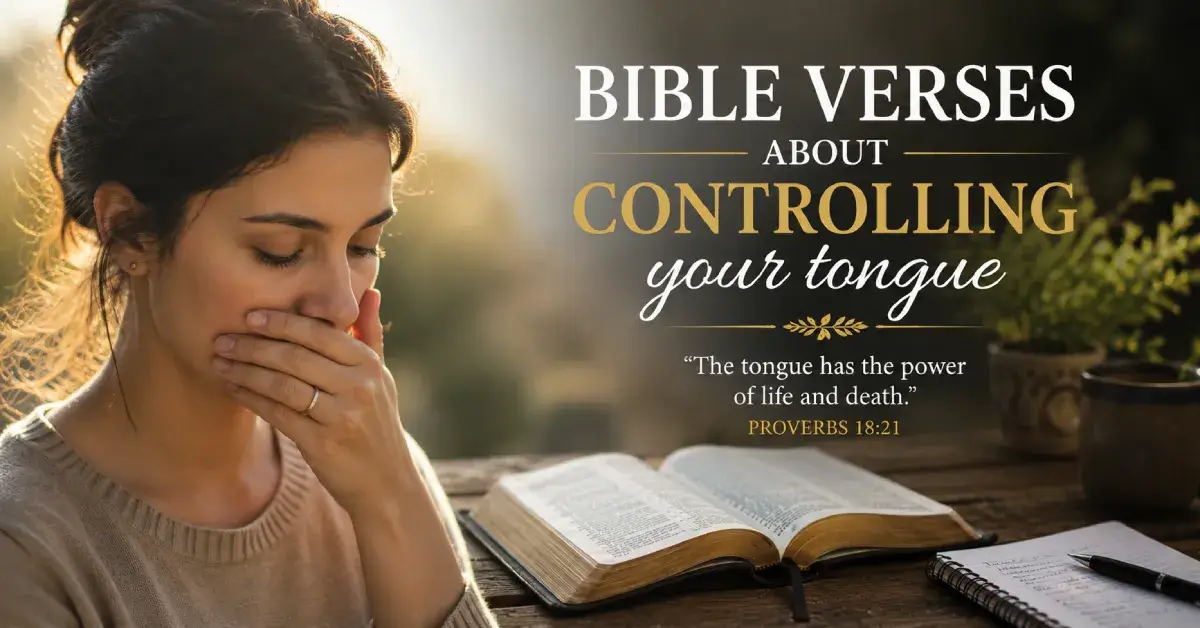
Words are powerful. A few spoken words can encourage someone deeply, heal a wounded heart, start conflict, or cause lasting pain.
The Bible speaks often about the tongue because our words reveal what’s happening inside our hearts.
“The tongue has the power of life and death, and those who love it will eat its fruit.” – Proverbs 18:21
Learning to control speech is part of spiritual growth – God calls believers to speak with wisdom, kindness, truth, and self-control. It’s difficult, but God can genuinely transform the way we speak.
What Does the Bible Say About the Tongue?
Speech can build others up or tear people down. It reflects wisdom, or the lack of it, and reveals the actual condition of the heart underneath the words.
“Out of the abundance of the heart the mouth speaks.” – Matthew 12:34
God desires our words to bring life, not harm – and that starts with what’s happening internally, not just with better word choices.
Bible Verses About Controlling Your Tongue
The Power of Words
- Proverbs 18:21 – “The tongue has the power of life and death.”
- James 3:5–6 – “The tongue is a small part of the body, but it makes great boasts.” James compares it to a spark that starts a forest fire, and a small rudder that steers a large ship.
- Proverbs 12:18 – “The words of the reckless pierce like swords, but the tongue of the wise brings healing.”
- Matthew 12:36 – “Everyone will have to give account for every empty word…”
- Psalm 19:14 – “May these words of my mouth… be pleasing in Your sight.”
Speaking Wisely
- Proverbs 15:1 – “A gentle answer turns away wrath.”
- Colossians 4:6 – “Let your conversation be always full of grace.”
- Ephesians 4:29 – “Do not let any unwholesome talk come out of your mouths… but only what is helpful for building others up.”
- Proverbs 10:19 – “Sin is not ended by multiplying words, but the prudent hold their tongues.”
- Ecclesiastes 3:7 – “A time to be silent and a time to speak.”
Self-Control in Speech
- James 1:19 – “Everyone should be quick to listen, slow to speak and slow to become angry.”
- Proverbs 21:23 – “Those who guard their mouths and their tongues keep themselves from calamity.”
- Galatians 5:22–23 – “The fruit of the Spirit is… self-control.”
- Psalm 141:3 – “Set a guard over my mouth, LORD.”
- Proverbs 17:27 – “The one who has knowledge uses words with restraint.”
The Tongue in the Book of James
James gives one of Scripture’s clearest teachings on speech. He explains that although the tongue is small, it directs the entire course of a life – comparing it to a horse’s bit, a ship’s rudder, and a spark that can set a forest ablaze.
James also makes an uncomfortable point worth sitting with: the same tongue shouldn’t be used both to praise God and to curse other people made in His image. Consistency matters more than eloquence.
Jesus and the Power of Words
Jesus used His words to comfort the brokenhearted, forgive sinners, teach truth, calm literal storms, and bring hope. His speech was consistently filled with truth, grace, and compassion – never one at the expense of the other.
He’s the working example of what controlled, purposeful speech actually looks like, not just the standard being pointed at.
Why Controlling the Tongue Is So Difficult
Words often flow directly from emotion – anger, pride, frustration, hurt, fear. Since the tongue reflects the heart, real change in speech has to start underneath the speech itself, not just at the level of word choice.
That’s why “just talk less” was never really the biblical instruction. The instruction is closer to: let God change what the words are coming from.
How to Control Your Tongue Biblically
- Pray before speaking, especially in charged conversations – ask for wisdom and patience before you need them, not mid-sentence.
- Pause before responding. Not every reaction needs immediate words attached to it.
- Speak with grace, choosing kindness even when you’re right and could win by being sharp instead.
- Fill your heart with Scripture. What’s stored up is what eventually comes out under pressure.
- Practice listening more. Wisdom usually starts there, not with having the last word.
Words Can Heal or Hurt
The Bible compares words to fire, seeds, swords, and healing medicine – all pointing at how deeply speech actually affects people, not just how it sounds in the moment.
Encouraging words can restore hope, strengthen relationships, and reflect God’s love. Hurtful words can damage trust, create division, and leave wounds that outlast the conversation itself.
A Devotional Reflection
Many of us have spoken words we later regretted – moments of anger, frustration, or impatience that became painful conversations in seconds.
God doesn’t simply call us to “talk less.” He calls us to let Him transform our hearts, and let our words follow from there. As our hearts grow closer to Him, gentleness tends to replace harshness, wisdom replaces impulsiveness, and grace replaces bitterness – not instantly, but genuinely.
“Let your conversation be always full of grace.” – Colossians 4:6
A Prayer for Controlling the Tongue
“Lord, help me speak with wisdom, kindness, and self-control. Guard my mouth from hurtful words and teach me to respond with grace. May my speech reflect Your love and bring encouragement to others. Amen.”
Signs of Godly Speech
A growing believer will increasingly speak with patience, encourage others, avoid gossip, listen carefully, and respond with gentleness rather than defensiveness – not perfectly, but noticeably more often than before.
FAQ: Bible Verses About Controlling Your Tongue
What Bible verse talks most directly about controlling the tongue?
James 3 is the fullest treatment in Scripture, though Proverbs 18:21 is the most quoted single verse.
Why is the tongue treated as such a big deal in the Bible?
Because words carry real spiritual and emotional power – they’re not treated as neutral in Scripture, they’re treated as consequential.
What does the Bible say about speaking in anger specifically?
It consistently points toward gentleness and self-control (James 1:19, Proverbs 15:1) rather than suppressing the anger and saying nothing.
Why is the tongue compared to a fire?
Because James’s point is proportion – a small spark can burn down something enormous, the same way a few careless words can do damage that outlasts the moment they were said in.
How can I actually control my speech better, not just want to?
Through prayer, Scripture, and listening more than reacting – but ultimately by asking God to change what the words are coming from, not just editing them after the fact.
What’s a good prayer for controlling the tongue?
Psalm 141:3 – “Set a guard over my mouth, LORD” – is short enough to actually remember and use in the moment.
Final Reflection
Words can either wound or heal. God calls believers to speak with wisdom, use words for encouragement, and let speech reflect His love rather than whatever emotion happens to be loudest in the moment.
“A gentle answer turns away wrath.” – Proverbs 15:1
May your words bring peace, grace, and life to everyone who hears them.