The Bible is traditionally arranged by type of literature, not by the order in which events happened. For example, the prophets often appear later in the Bible even though they lived during the time of kings.
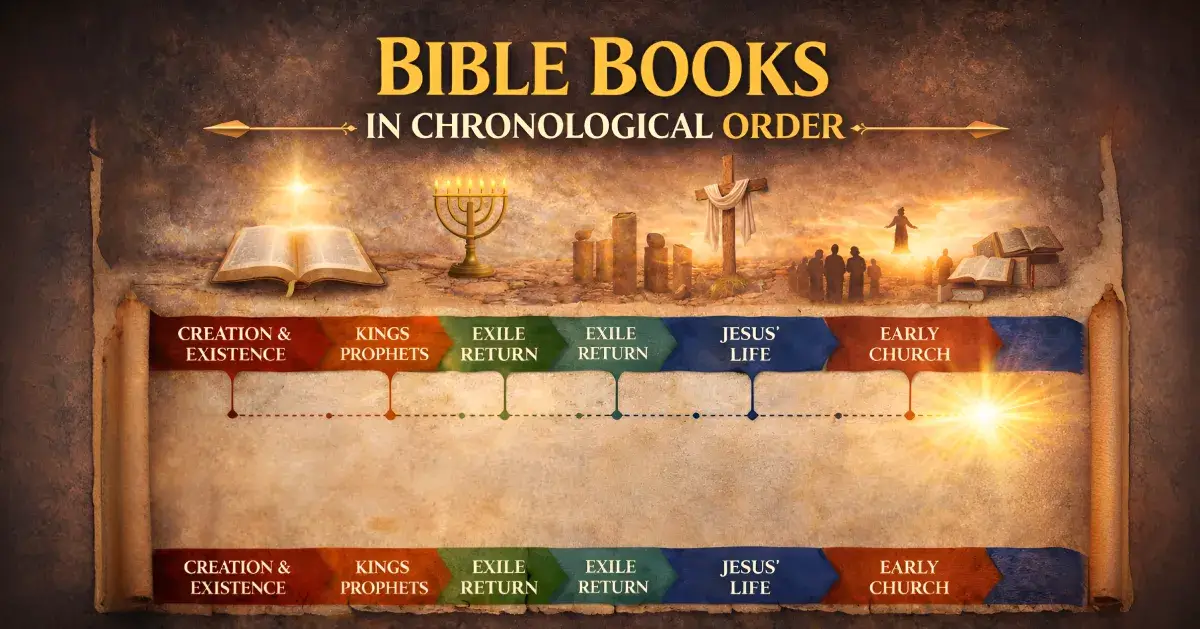
Reading the Bible books in chronological order helps readers understand the historical flow of God’s story—from creation to the early church.
“In the beginning God created the heavens and the earth.” — Genesis 1:1
Let’s explore how the books of the Bible fit into the timeline of biblical history.
What Does Chronological Order Mean?
Chronological order means arranging the Bible books based on when the events occurred, not when they appear in the traditional Bible layout.
For example:
- Job likely lived during the time of the patriarchs.
- Many prophets wrote during the reign of Israel’s kings.
- The New Testament letters were written during the early church period.
Understanding this timeline helps connect historical events across Scripture.
Old Testament Books in Chronological Order
Below is a commonly accepted timeline of the Old Testament books.
Creation and Early History
- Genesis
- Job
“The LORD gave and the LORD has taken away.” — Job 1:21
Exodus and Wilderness Period
- Exodus
- Leviticus
- Numbers
- Deuteronomy
“Love the LORD your God with all your heart.” — Deuteronomy 6:5
Conquest and Judges
- Joshua
- Judges
- Ruth
“Choose for yourselves this day whom you will serve.” — Joshua 24:15
United Kingdom (Kings of Israel)
- 1 Samuel
- 2 Samuel
- 1 Chronicles
- Psalms
- Proverbs
- Song of Solomon
- Ecclesiastes
“The fear of the LORD is the beginning of wisdom.” — Proverbs 9:10
Divided Kingdom and Prophets
- 1 Kings
- 2 Kings
- 2 Chronicles
- Isaiah
- Hosea
- Amos
- Micah
- Jonah
- Nahum
- Habakkuk
- Zephaniah
- Jeremiah
- Lamentations
“The LORD is good to those whose hope is in him.” — Lamentations 3:25
Exile and Return
- Ezekiel
- Daniel
- Ezra
- Haggai
- Zechariah
- Esther
- Nehemiah
- Malachi
“Return to me, and I will return to you.” — Malachi 3:7
New Testament Books in Chronological Order
Life and Ministry of Jesus
- Matthew
- Mark
- Luke
- John
“For God so loved the world.” — John 3:16
Early Church
- Acts
“You will receive power when the Holy Spirit comes on you.” — Acts 1:8
Letters of the Apostles
- James
- Galatians
- 1 Thessalonians
- 2 Thessalonians
- 1 Corinthians
- 2 Corinthians
- Romans
“All have sinned and fall short of the glory of God.” — Romans 3:23
Prison Letters
- Ephesians
- Philippians
- Colossians
- Philemon
“I can do all this through him who gives me strength.” — Philippians 4:13
Pastoral Letters
- 1 Timothy
- Titus
- 2 Timothy
General Letters
- Hebrews
- 1 Peter
- 2 Peter
- Jude
- 1 John
- 2 John
- 3 John
“God is love.” — 1 John 4:8
Final Prophetic Book
- Revelation
“Yes, I am coming soon.” — Revelation 22:20
Why Reading the Bible Chronologically Helps
Reading Scripture in chronological order can:
- Clarify historical events
- Connect prophets with kings
- Show the progression of God’s plan
- Improve understanding of biblical context
It also helps readers see the continuous story of redemption throughout the Bible.
Tips for Reading the Bible Chronologically
1. Use a chronological reading plan
Many study Bibles provide a structured timeline.
2. Take notes on historical context
Understanding the cultural background helps interpret Scripture.
3. Connect prophets with historical books
For example, Isaiah lived during the time described in Kings.
4. Focus on the larger story
The Bible reveals God’s plan to redeem humanity.
“Your word is a lamp for my feet.” — Psalm 119:105
FAQ: Bible Books in Chronological Order
What does chronological order mean in the Bible?
It means arranging the books according to when events occurred in history.
Is the Bible normally arranged chronologically?
No. The Bible is organized by literary categories such as law, history, poetry, prophecy, and letters.
Which book comes first chronologically?
Genesis begins the story of creation.
What is the last book chronologically?
Revelation describes the final events and future hope.
Why read the Bible chronologically?
It helps readers understand the historical timeline and connections between books.
Final Reflection
The Bible tells one continuous story—from creation to redemption and the promise of Christ’s return. Reading the Bible books in chronological order reveals how God’s plan unfolded through history.
“Jesus Christ is the same yesterday and today and forever.” — Hebrews 13:8
Understanding the timeline of Scripture can deepen faith and appreciation for God’s Word.