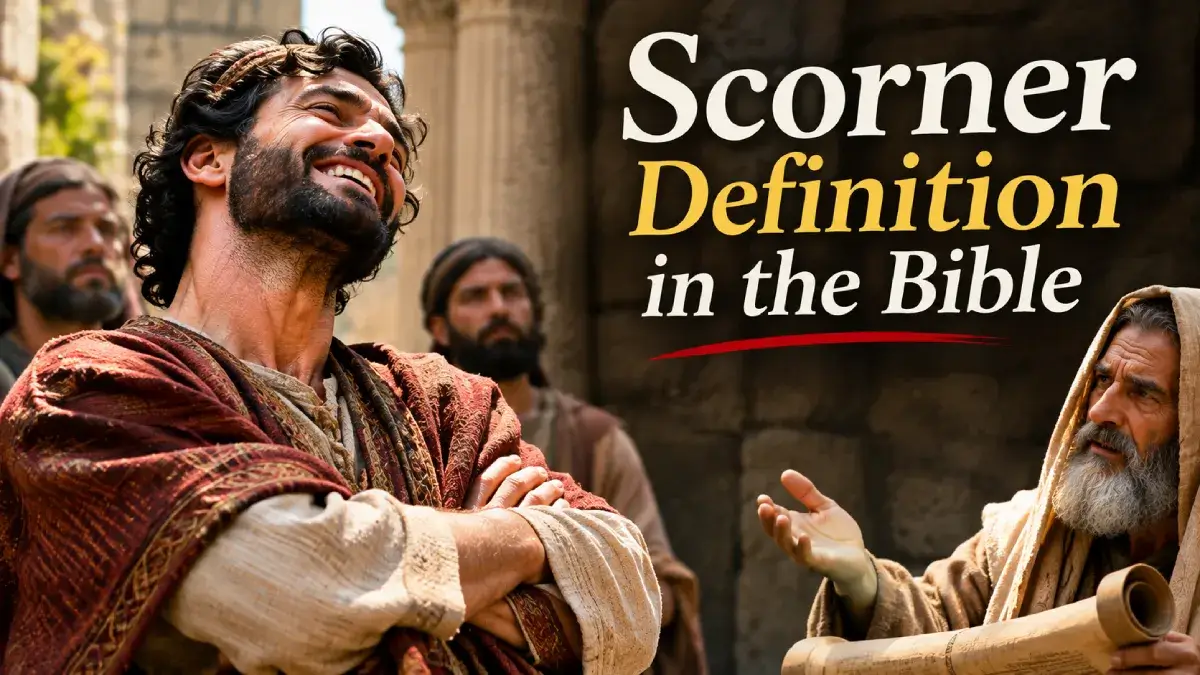
A scorner in the Bible is a person who mocks, ridicules, or treats wisdom and correction with contempt. A scorner is often characterized by pride, arrogance, and resistance to instruction. In Proverbs, scorners reject wisdom and make light of what is right, while Scripture warns that their attitude leads to destructive consequences.
The Bible encourages believers to reject scornful behavior, receive correction with humility, and pursue wisdom and understanding.
The Bible frequently warns against people who mock wisdom, reject correction, and treat God’s truth with contempt. In several passages, particularly in the book of Proverbs, these individuals are described as scorners. Their behavior is more than ordinary disagreement or criticism. It reflects an attitude of pride that refuses to receive instruction and often ridicules those who seek to live according to God’s wisdom.
Understanding the scorner definition in the Bible helps us recognize an attitude that Scripture repeatedly cautions against. It also challenges us to examine our own words, reactions, and willingness to accept correction.
Whether you are studying Proverbs, exploring biblical character traits, or trying to understand what it means to be a scorner, the Scriptures offer valuable guidance.
What Does Scorner Mean in the Bible?
In biblical language, a scorner is someone who expresses contempt through mocking, ridicule, or disrespect. A scorner does not simply make a mistake or ask difficult questions. The defining attitude is a proud refusal to respect wisdom or accept correction.
The book of Proverbs provides some of the clearest descriptions:
Proverbs 13:1 (KJV):
A wise son heareth his father’s instruction: but a scorner heareth not rebuke.
This verse contrasts two attitudes. A wise person listens to instruction, while a scorner refuses to receive correction.
A scorner may believe that personal opinions are more important than godly wisdom. Rather than considering advice, the person dismisses it, mocks it, or responds with hostility.
The Bible therefore presents scorn as a serious spiritual problem because it prevents a person from learning, growing, and walking in wisdom.
The Hebrew and Greek Meaning of Scorner
Understanding the original biblical languages provides additional insight into the meaning of a scorner.
1. Hebrew Meaning: Luts (לוּץ)
In the Old Testament, the Hebrew word commonly translated as “scorner” or “mocker” is luts. It describes someone who mocks, derides, or speaks contemptuously.
This word appears in several passages in Proverbs, where the scorner is contrasted with the wise person.
Proverbs 9:7–8 (KJV):
He that reproveth a scorner getteth to himself shame: and he that rebuketh a wicked man getteth himself a blot.
Reprove not a scorner, lest he hate thee: rebuke a wise man, and he will love thee.
These verses reveal an important difference between a scorner and a wise person. A scorner may react to correction with hatred, while a wise person appreciates instruction.
2. Greek Meaning: Empaiktēs (ἐμπαίκτης)
In the New Testament, the Greek word empaiktēs refers to a mocker or scoffer.
It appears in 2 Peter 3:3, where Peter warns believers that mockers will appear in the last days.
2 Peter 3:3 (KJV):
Knowing this first, that there shall come in the last days scoffers, walking after their own lusts.
The verse describes people who mock the promise of Christ’s return and follow their own desires.
Although the Hebrew and Greek terms come from different biblical contexts, both communicate the idea of mocking or treating something with contempt.
7 Characteristics of a Scorner According to the Bible
The Bible describes several attitudes and behaviors associated with scorners. These characteristics can help us understand why Scripture warns against this behavior.
1. A Scorner Rejects Correction
One of the clearest characteristics of a scorner is an unwillingness to accept correction.
Proverbs 15:12 (KJV):
A scorner loveth not one that reproveth him: neither will he go unto the wise.
A person who refuses all correction cannot easily grow in wisdom. Instead of considering whether advice might be helpful, the scorner rejects the person offering it.
Believers should remember that correction is not always an attack. Sometimes it is an opportunity to recognize mistakes and grow spiritually.
2. A Scorner Is Proud and Arrogant
Pride is closely connected with scornful behavior.
Proverbs 21:24 (KJV):
Proud and haughty scorner is his name, who dealeth in proud wrath.
This verse directly associates a scorner with arrogance and pride.
A scornful person may believe that nobody has anything valuable to teach them. Such an attitude makes it difficult to recognize personal weaknesses or appreciate the wisdom of others.
3. A Scorner Mocks Wisdom
A scorner does not value instruction in the same way a wise person does.
Proverbs 1:22 (KJV):
How long, ye simple ones, will ye love simplicity? and the scorners delight in their scorning, and fools hate knowledge?
This passage shows that scorners take pleasure in mocking rather than pursuing understanding.
The verse reminds readers that wisdom requires a willingness to listen and learn.
4. A Scorner Creates Conflict
Scornful attitudes can damage relationships and create unnecessary arguments.
Proverbs 22:10 (KJV):
Cast out the scorner, and contention shall go out; yea, strife and reproach shall cease.
This proverb describes the disruptive influence a scorner can have within a community.
Constant ridicule, disrespect, and hostility make peaceful relationships difficult. The verse highlights the importance of addressing behavior that repeatedly creates conflict.
5. A Scorner Refuses to Learn From Rebuke
A scorner often treats rebuke as an insult instead of an opportunity for improvement.
Proverbs 9:8 (KJV):
Reprove not a scorner, lest he hate thee: rebuke a wise man, and he will love thee.
The contrast is important. A wise person can receive correction without treating the person giving it as an enemy.
The scorner, however, may respond with resentment because correction challenges personal pride.
6. A Scorner Influences Others Negatively
Scornful behavior can affect more than one individual. It can influence the attitudes of an entire group.
Proverbs 29:8 (KJV):
Scornful men bring a city into a snare: but wise men turn away wrath.
This verse contrasts the destructive influence of scornful people with the peaceful influence of wise people.
Our words and attitudes can shape the environment around us. That is why Scripture encourages us to speak with humility, wisdom, and respect.
7. A Scorner Faces the Consequences of Pride
The Bible repeatedly warns that pride and contempt have consequences.
Proverbs 3:34 (KJV):
Surely he scorneth the scorners: but he giveth grace unto the lowly.
This verse presents a contrast between scorners and humble people. God opposes the proud but gives grace to the lowly.
The message is clear: humility opens the heart to God’s grace, while prideful contempt leads a person away from wisdom.
10 Important Bible Verses About Scorners
The following Scriptures provide a deeper understanding of scorners and the warnings associated with their behavior.
1. Proverbs 1:22 — Scorners Delight in Mocking
How long, ye simple ones, will ye love simplicity? and the scorners delight in their scorning, and fools hate knowledge?
This verse describes scorners as people who take pleasure in mocking. It encourages readers to seek knowledge rather than delight in foolish behavior.
2. Proverbs 3:34 — God Gives Grace to the Humble
Surely he scorneth the scorners: but he giveth grace unto the lowly.
God’s response to pride is contrasted with His grace toward the humble. This verse reminds us to approach Him with humility.
3. Proverbs 9:7 — Correcting a Scorner Can Bring Shame
He that reproveth a scorner getteth to himself shame: and he that rebuketh a wicked man getteth himself a blot.
This proverb warns that confronting a scorner may lead to personal hostility or embarrassment rather than a positive response.
4. Proverbs 9:8 — A Wise Person Loves Correction
Reprove not a scorner, lest he hate thee: rebuke a wise man, and he will love thee.
The verse reveals the difference between a proud attitude and a teachable heart.
5. Proverbs 13:1 — A Scorner Rejects Rebuke
A wise son heareth his father’s instruction: but a scorner heareth not rebuke.
This passage teaches that listening to instruction is an important characteristic of wisdom.
6. Proverbs 15:12 — A Scorner Avoids the Wise
A scorner loveth not one that reproveth him: neither will he go unto the wise.
A person who refuses correction may also avoid people who could offer valuable guidance.
7. Proverbs 19:29 — Judgment Is Prepared for Scorners
Judgments are prepared for scorners, and stripes for the back of fools.
This verse warns that foolish and scornful behavior has consequences.
8. Proverbs 21:24 — Pride Defines the Scorner
Proud and haughty scorner is his name, who dealeth in proud wrath.
This Scripture directly connects scorn with arrogance and pride.
9. Proverbs 22:10 — Removing the Scorner Stops Contention
Cast out the scorner, and contention shall go out; yea, strife and reproach shall cease.
This proverb highlights how a scornful attitude can create conflict within a community.
10. 2 Peter 3:3 — Scoffers Appear in the Last Days
Knowing this first, that there shall come in the last days scoffers, walking after their own lusts.
Peter warns believers that some people will mock the promise of Christ’s return while following their own desires.
Together, these passages show that scorn is not merely a matter of unpleasant speech. It reflects an attitude that rejects wisdom, resists correction, and can harm others.
Examples of Scorners and Mockers in the Bible
The Bible includes several examples of people who mocked God’s purposes, His servants, or His promises.
1. The Mockers in Noah’s Generation
Genesis 6:5–7 describes the wickedness of humanity before the flood. Although the passage does not specifically use the word “scorner,” it provides an example of widespread human rebellion against God.
The account reminds readers that persistent rejection of God’s ways is serious.
2. The People Who Mocked Elisha
2 Kings 2:23–24 records an incident in which a group of youths mocked Elisha as he traveled to Bethel. The passage describes their taunts and the judgment that followed.
This account demonstrates that Scripture treats contempt toward God’s prophetic ministry seriously. It should be read in its historical and literary context rather than used to justify retaliation against people who disagree with us.
3. The Soldiers Who Mocked Jesus
Matthew 27:27–31 describes Roman soldiers mocking Jesus before His crucifixion. They placed a robe on Him, put a crown of thorns on His head, and ridiculed Him.
Their actions reveal the cruelty and contempt Jesus endured even as He carried out His mission of salvation.
4. The Scoffers Who Questioned Christ’s Return
2 Peter 3:3–4 warns that scoffers would question the promise of Jesus’ return.
Peter responds by reminding believers that God’s timing should not be measured by human expectations. He explains that the apparent delay reflects God’s patience, giving people an opportunity to repent (2 Peter 3:8–9).
What Is the Difference Between a Scorner and a Fool in the Bible?
The words “scorner” and “fool” are sometimes used in similar contexts in Proverbs, but they emphasize different aspects of unwise behavior.
A fool is often described as someone who rejects wisdom, acts without understanding, or behaves foolishly. A scorner is particularly associated with mocking, ridicule, and contempt toward wisdom or correction.
For example:
- Proverbs 1:7: The fool despises wisdom and instruction.
- Proverbs 13:1: The scorner refuses to hear rebuke.
- Proverbs 21:24: The scorner is characterized by pride and arrogance.
These descriptions can overlap. A scorner may also act foolishly, but the word scorner emphasizes the contemptuous attitude behind the behavior.
What Does the Bible Say About Dealing With a Scorner?
The Bible offers wisdom about responding to people who mock, reject correction, or create conflict.
1. Do Not Respond With the Same Attitude
Proverbs 15:1 (KJV):
A soft answer turneth away wrath: but grievous words stir up anger.
When someone speaks with contempt, responding with anger may make the situation worse. A gentle and thoughtful response can help prevent unnecessary conflict.
2. Use Discernment When Giving Correction
Proverbs 9:7–8 warns that correcting a scorner may provoke hatred rather than understanding.
This does not mean believers should never speak truth. It means they should consider the right time, manner, and circumstances when offering correction.
3. Avoid Foolish Arguments
2 Timothy 2:23 (KJV):
But foolish and unlearned questions avoid, knowing that they do gender strifes.
Paul encourages Timothy to avoid arguments that produce conflict instead of helpful discussion.
Not every disagreement requires a response. Sometimes wisdom means refusing to participate in an unproductive argument.
4. Continue Practicing Humility and Love
Ephesians 4:31–32 encourages believers to put away bitterness, anger, and malicious behavior and to show kindness and forgiveness.
Even when dealing with a difficult person, Christians should seek to reflect Christlike character.
How Can We Avoid Becoming a Scorner?
The biblical warnings about scorners are not only about other people. They also invite us to examine our own hearts.
Here are five practical ways to avoid developing a scornful attitude.
1. Welcome correction. Instead of immediately becoming defensive, consider whether advice can help you grow.
2. Practice humility. Remember that everyone has something to learn. Do not assume that personal opinions are always right.
3. Respect God’s Word. Approach Scripture with a willingness to understand and obey rather than dismissing its teaching.
4. Watch your words. Avoid using ridicule, insults, or contempt to make others feel small.
5. Seek wisdom. Read the book of Proverbs and ask God to develop a teachable and understanding heart.
Proverbs 12:15 (KJV):
The way of a fool is right in his own eyes: but he that hearkeneth unto counsel is wise.
A teachable spirit is one of the clearest ways to avoid the path of a scorner.
Frequently Asked Questions About the Scorner Definition in the Bible
What is the simple definition of a scorner in the Bible?
A scorner is someone who mocks, ridicules, or treats wisdom and correction with contempt. The Bible particularly associates scorners with pride and resistance to instruction.
What is the Hebrew word for scorner?
The Hebrew word commonly translated as “scorner” or “mocker” in the Old Testament is luts. It carries the idea of mocking, deriding, or speaking contemptuously.
What is the Greek word for scorner?
The Greek noun empaiktēs means a mocker or scoffer. It appears in 2 Peter 3:3, where Peter warns about scoffers in the last days.
What is the opposite of a scorner in the Bible?
A humble and teachable person is a strong contrast to a scorner. Proverbs 9:8 contrasts the scorner, who rejects correction, with the wise person, who can receive rebuke and appreciate instruction.
What does Proverbs 3:34 mean?
Proverbs 3:34 teaches that God opposes scorners but gives grace to the humble. It emphasizes the importance of humility before God rather than pride and contempt.
Can a scorner change?
Yes. The Bible calls people to repentance and a transformed life. A person who has displayed pride or mocking behavior can turn to God, seek forgiveness, and learn to walk in humility.
Acts 3:19 (KJV): Repent ye therefore, and be converted, that your sins may be blotted out, when the times of refreshing shall come from the presence of the Lord.
Is a scorner the same as a scoffer?
The words are closely related and often communicate the same general idea: someone who mocks or expresses contempt. The KJV uses both “scorner” and “scoffer” in different passages.
Final Thoughts
The scorner definition in the Bible describes more than someone who makes jokes or disagrees with another person’s opinion. It identifies an attitude of pride, mockery, and resistance to wisdom and correction.
Throughout Proverbs, scorners are contrasted with humble and teachable people. Scripture warns that prideful contempt creates conflict and leads away from wisdom, while humility allows a person to receive instruction and grow.
These passages also encourage us to examine our own behavior. Instead of mocking correction, we should welcome wise counsel, respect God’s Word, and treat others with kindness.
The Bible’s message is clear: Do not delight in scorning; pursue wisdom, humility, and a heart that is willing to learn.