One of the most common questions people ask about the Bible is:
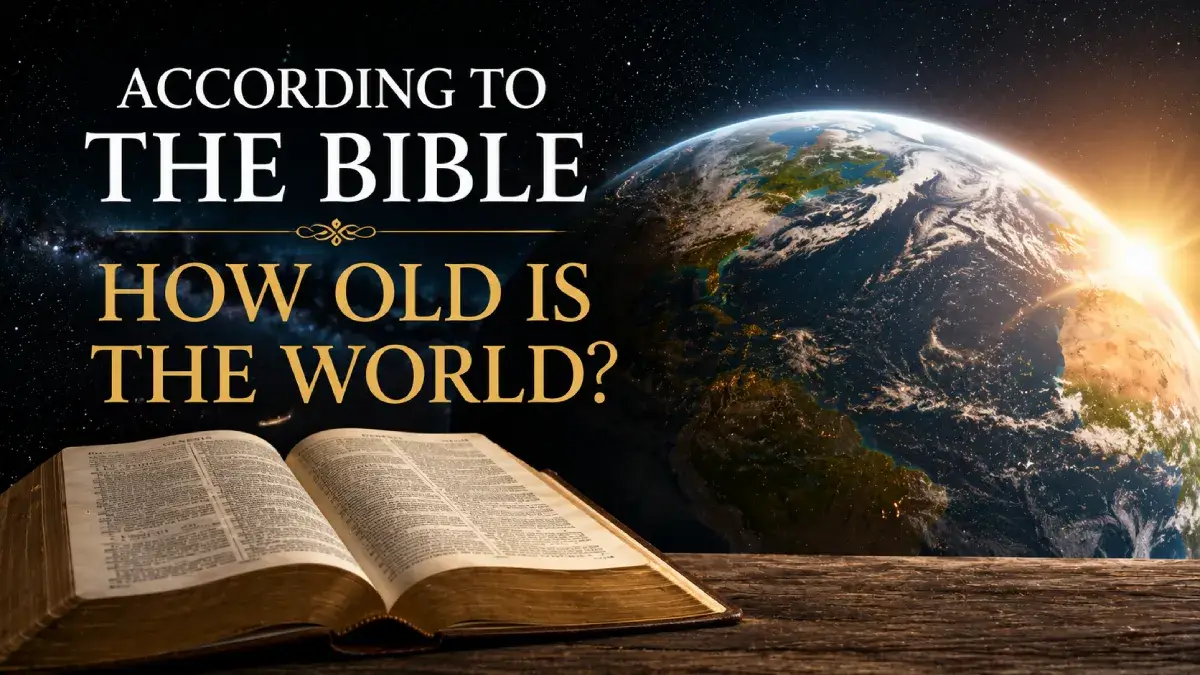
“According to the Bible, how old is the world?”
Some Christians believe the Bible indicates the earth is about 6,000 years old, while others believe Scripture allows for a much older earth.
The Bible’s primary purpose is not to provide a scientific timeline but to reveal who created the world, why it was created, and God’s plan for humanity.
Still, Scripture gives us important clues that have led Christians throughout history to carefully study the age of the earth.
“In the beginning God created the heavens and the earth.” — Genesis 1:1
Let’s explore what the Bible teaches, where different interpretations come from, and what Christians agree upon.
Does the Bible Give the Earth’s Exact Age?
The simple answer is:
No.
The Bible never explicitly states:
“The earth is __ years old.”
Instead, readers estimate the age of the world by combining information from:
- The creation account in Genesis
- Genealogies in Genesis and other books
- Historical timelines recorded in Scripture
These calculations have produced different conclusions among Bible-believing Christians.
Why Do Some Christians Say the Earth Is About 6,000 Years Old?
The most well-known estimate comes from adding together the ages recorded in the genealogies of Genesis.
According to this approach:
- Adam was created on Day Six.
- Genesis records the ages of Adam’s descendants.
- These genealogies continue through Noah, Abraham, and later biblical history.
- Combined with historical dates, some conclude the earth is approximately 6,000 years old.
One famous calculation was made by Archbishop James Ussher (1581–1656), who dated creation to 4004 BC.
Although influential, Ussher’s chronology is an interpretation rather than a direct biblical statement.
Do All Christians Agree?
No.
Faithful Christians hold different views about the age of the earth while affirming the authority of Scripture.
The three most common perspectives are:
1. Young Earth Creationism
Young Earth Creationists believe:
- Genesis describes six literal 24-hour creation days.
- The genealogies are largely complete.
- The earth is roughly 6,000–10,000 years old.
They emphasize reading Genesis as straightforward historical narrative.
Key Scriptures
- Genesis 1–2
- Exodus 20:11
- Romans 5:12
Strengths
- Takes the Genesis timeline in a literal sense.
- Highlights God’s direct and purposeful creation.
2. Old Earth Creationism
Old Earth Creationists believe:
- God is the Creator of everything.
- The earth may be billions of years old.
- The “days” in Genesis may represent longer periods or a literary framework rather than six consecutive 24-hour days.
They seek to harmonize biblical teaching with observations about the age of the universe while affirming God’s sovereignty.
Key Scriptures
- Psalm 90:4
- 2 Peter 3:8
These passages remind readers that God’s relationship to time differs from ours, though they are not direct statements about the length of the creation days.
3. Literary Framework View
Some Christians understand Genesis 1 primarily as a carefully structured theological account emphasizing:
- God as Creator
- The goodness of creation
- Humanity’s unique role
- God’s orderly design
This view focuses less on calculating the earth’s age and more on the theological message of the text.
What Do Christians Agree On?
Despite differences about the earth’s age, Bible-believing Christians agree on several foundational truths:
God Created Everything
“In the beginning God created the heavens and the earth.” — Genesis 1:1
Creation exists because God spoke it into existence.
Humanity Is Created in God’s Image
Genesis teaches that people are uniquely created to reflect God’s character and steward His creation.
Creation Was Originally Good
God repeatedly declared His creation “good,” culminating in “very good” after humanity was created (Genesis 1:31).
Sin Entered Through Adam and Eve
The Bible teaches that human rebellion introduced sin and death into the world (Genesis 3; Romans 5:12).
Jesus Is the Creator and Sustainer
The New Testament reveals that Christ was actively involved in creation.
Colossians 1:16–17
“For in him all things were created… He is before all things, and in him all things hold together.”
Why Doesn’t the Bible Focus on the Earth’s Age?
The Bible is primarily a book of redemption, not a scientific textbook.
Its central message is:
- Who God is.
- Why He created us.
- Humanity’s need for salvation.
- God’s plan fulfilled through Jesus Christ.
Knowing the exact age of the earth is far less important than knowing the Creator.
What Should Christians Remember?
Whether someone holds a young-earth or old-earth view, believers should approach the discussion with humility and grace.
The age of the earth is not a test of salvation.
Christians can disagree respectfully on secondary matters while remaining united in the gospel.
Paul reminds believers:
“Accept the one whose faith is weak, without quarreling over disputable matters.” — Romans 14:1
A Devotional Reflection
When we look at the stars, mountains, oceans, and forests, we’re reminded that creation points beyond itself.
The greatest question isn’t simply “How old is the earth?”
It’s:
“Who made it?”
The Bible’s answer is clear.
God created the heavens and the earth with wisdom, power, and purpose.
Every sunrise reflects His faithfulness.
Every season displays His order.
Every human life bears His image.
Whether the earth is thousands or billions of years old according to one’s interpretation, one truth remains unchanged:
The Creator lovingly entered His creation through Jesus Christ to redeem the people He made.
Creation ultimately points us to worship.
“The heavens declare the glory of God.” — Psalm 19:1
A Prayer of Wonder and Worship
🙏 “Heavenly Father, thank You for creating the heavens, the earth, and everything in them. Help me stand in awe of Your wisdom, power, and creativity. Give me humility as I study Your Word and grace toward those who hold different views on secondary issues. Above all, help me know You more deeply and trust the salvation You have provided through Jesus Christ. May all creation lead my heart to worship You. In Jesus’ name, Amen.”
Frequently Asked Questions
According to the Bible, how old is the world?
The Bible does not state the earth’s exact age. Some Christians estimate about 6,000 years based on biblical genealogies, while others believe Scripture allows for an older earth.
Does the Bible say the earth is 6,000 years old?
No. The Bible never gives that exact number. It is a conclusion drawn by some interpreters using the genealogies in Genesis.
Who calculated the earth’s age as 4004 BC?
Archbishop James Ussher developed a well-known chronology dating creation to 4004 BC by adding together biblical genealogies and historical dates.
Can Christians disagree about the age of the earth?
Yes. Many faithful Christians hold different views on the earth’s age while affirming that God is the Creator and that the Bible is His inspired Word.
What is the Bible’s main message about creation?
The Bible teaches that God intentionally created the universe, humanity is made in His image, creation reflects His glory, and Jesus Christ is both Creator and Redeemer.
Final Reflection
The Bible does not answer every scientific question we might ask, but it clearly answers the most important ones.
Scripture teaches that:
- God created the heavens and the earth.
- Creation reflects His wisdom and glory.
- Humanity was created in His image.
- Sin entered the world through human rebellion.
- Jesus Christ is both Creator and Savior.
While Christians may respectfully differ on the earth’s exact age, they can confidently stand together on the foundational truth proclaimed in the opening words of Scripture:
“In the beginning God created the heavens and the earth.” — Genesis 1:1
May the wonder of creation inspire you not only to seek knowledge but also to worship the Creator who made all things and lovingly calls us into a relationship with Him.